


Bake your rice extra crispy
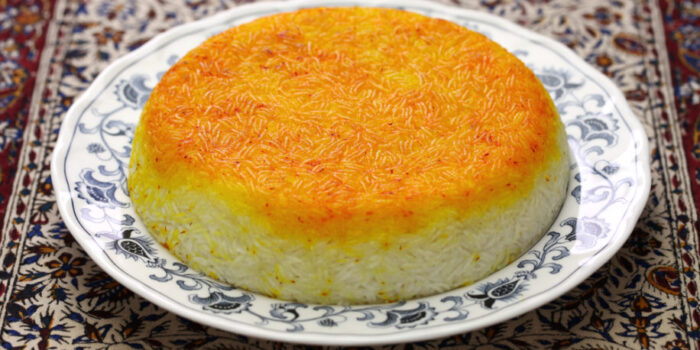
Rice is without a doubt my favorite food. A lot of people don’t understand it at all, but nothing beats a bowl of white rice for me. So it’s a great mystery to me that I’ve only been crisping up my rice occasionally for the past few months, because it somehow makes this wonder grain even more delicious.

Actually, it makes perfect sense. Those crispy bits of meat at the bottom of the pan are always the best too, right? It’s no different with rice. In some cultures, they’ve been crisping up their rice for centuries; when it comes to that, we’re still a little behind.
For example, an Iranian feast isn’t complete without tahdig (pronounced: ta-DIEK): the crispy layer of rice at the bottom of the pan. When it’s prepared properly, it’s a true work of art. The crispy disc is served whole or cut into pieces. It will probably take a while to master tahdig, but the moment you get it perfectly out of the pan is pure bliss. So above all, keep practicing. There are also plenty of easier ways to make your rice crispy.
Tahdig
Going all in for the tahdig right away? Good for you! Soak 350–400 g basmati rice in cold water for 30 minutes. Rinse the rice in a sieve until the water running off it is clear. Bring a large pan of salted water to the boil and cook the rice for 5 minutes, until the outside is soft but the inside is still translucent and hard. Drain the rice.
Heat a cast-iron pan over low heat for a few minutes and add ghee, butter or sunflower oil. Add half of the rice and spread it over the bottom of the pan, pressing it down firmly. Add the remaining rice and shape it into a pyramid (the inside should be highest and the outside lowest). Make a few holes in the rice with the back of a wooden spoon, put the lid on the pan and cook the rice for 10 minutes. Then turn the heat to the lowest setting, cover the pan with a clean tea towel and put the lid back on. Cook for another 50 minutes.
Carefully spoon the rice onto a large plate, making sure not to damage the crispy tahdig. Carefully loosen the edge of the tahdig with a spoon or dull knife and try to remove it from the pan in one piece. Then place it on top of the rice. Don’t worry if the tahdig does break, it won’t make it any less delicious.
You can optionally add yogurt or egg to the rice so that it holds its shape better. Or add some turmeric or saffron to the fat in the pan for a beautiful yellow color. To prevent burning, you can also place a circle of parchment paper on the bottom of the pan.
Easier
I came across a quicker method on Bon Appetit. In this recipe for crispy rice with fresh, herby chicken salad, the rice is also par-cooked for 5 minutes, but the process afterward is much faster. You use less rice and simply spread it all over the bottom of the pan. Then you fry the rice until completely crispy in 7–8 minutes.
Make sure you use a frying pan with a thick, flat bottom. It’s important that the butter or oil forms an even layer in the pan. If there’s hardly any fat in the middle, the rice will burn there.
Easiest of all: rice cakes
Does all of this sound far too complicated? You can also make “quick” rice cakes that are just as delicious. Cook the rice according to the instructions on the package; short-grain Japanese rice works best. Season the rice and let it cool completely to room temperature for an hour. Then shape it into cakes with wet hands (to prevent sticking) and fry the cakes in plenty of sunflower oil until lightly browned and crispy.
Also read:


