



The difference between black and white pepper
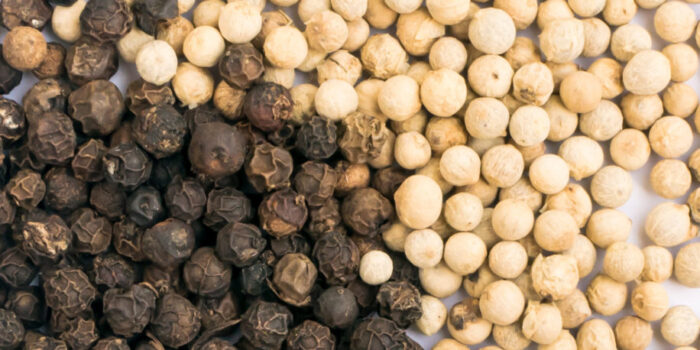
Things can get heated. One person swears by black pepper, while another deliberately chooses white pepper. For all the ‘white refusers’: there really are differences in taste.

Found yourself in a heated discussion? First of all, it’s good to know that white and black pepper come from the same plant. Although that’s no proof that it doesn’t matter which pepper you use.
Black versus white pepper
Black pepper is made by drying the green, unripe peppercorn in the sun. White pepper ripens on the plant until the peppercorn changes colour to orange or red. The skin is soaked loose under running water, the white flesh is dried, and there you have your white peppercorn.
Looks and taste
But why on earth would you choose that white peppercorn? It’s not just about the taste. You can also choose white pepper simply ‘for looks’. Because, let’s be honest, who wants black specks in a beautiful cream-coloured béchamel? So, to avoid marring light-coloured dishes while still giving them some bite, you can choose white pepper.
Subtle or dominant
While black pepper mainly adds heat to your food, white pepper also provides an earthy flavour. Asian chefs in particular therefore choose white pepper, which pairs well with spices such as cumin. White pepper also has a more subtle flavour; the black variety can be rather dominant.
For both black and white pepper, just as with wine, the flavour depends on the region where the pepper comes from. A pepper can be spicy, for example, or have citrus notes. And if you’re going for flavour, always buy whole peppercorns. Because whatever colour they are, freshly ground pepper always tastes best.
Also read:
- What is the difference between salami and cervelaat?
- What is the difference between baking powder and baking soda?
- What is the difference between a moorkop and a Bossche bol?


