


Burgundian relaxation by the Adriatic Sea
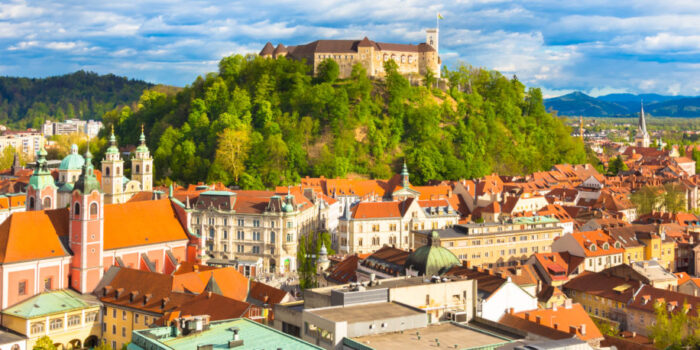
Slovenia. It’s closer than you think. And especially when it comes to its wines. Actually, Slovenes are Austrians who speak a different language. Because before they were forced into the Yugoslav mold with other Slavic peoples in 1919, they belonged to the Habsburg Empire. Along with their current neighboring countries – Croatia, Italy, Austria and Hungary – winemaking was already firmly on the agenda. Miss WineLane went looking and found a Slovenian gem.

From communist to independent winemaking
Naturally, the entire Yugoslavian Tito adventure caused local wine development to stagnate considerably. Existing wine production was organized into large cooperatives, turning quality into volume. But in 1991, Slovenia was the first to shake off the communist yoke. Independence was good news for the persevering winemakers. Most vineyards are now privately owned again, and quality found its way back. Today, wonderful wines are being made again, including from interesting local grape varieties.
Primorska is the westernmost wine region. A coastal region right on the Italian border. But it’s only a half-hour drive from Trieste, and Vienna is within 4.5 hours. Here, sunny vineyards are influenced by the (Adriatic) sea, with mineral-rich soils, and it gets quite windy. This powerful, cool northeastern wind – the bora – blows strongly through the vineyards, especially in spring and autumn.
In the local Vipavka Dolina (Vipava Valley), Primož Lavrenčič even named his Burja Estate after that wind. He grows native grapes such as ribolla, istrian malvasia, laski riesling and zelen. But the local conditions are also suited to a wine with a more international allure: his beloved Burja Noir. A Pinot Noir considered the best in the country. This Primož is therefore a man with passion and vision.
Fully biodynamic
Primož Lavrenčič grew up in the vineyard. His family has been active in Slovenian winemaking since the sixteenth century. And they kept at it; not even Tito could stop them. In 2010, Primož chose to follow his own path so he could work fully biodynamically. In both the vineyard and the cellar of his small estate, he now lets nature do as much of the work as possible. Instead of using a pump to transfer the grape juice, he prefers to use gravity. A pump would negatively affect the structure of the juice. A technique that, incidentally, is also used by more good wineries.
Whatever he does, it results in personal wines full of character. Beautifully complex and 100 percent organic! In the meantime, he has even built a strong reputation worldwide. At the Danish restaurant Noma – one of the world’s best restaurants (which, incidentally, is closing its doors at the end of the year) – his wine is on the menu, and the Amsterdam restaurant Bolenius also serves Burja.
The Burja Noir 2013 is a beautiful cherry red, with lovely soft, fresh aromas of ripe red fruit, chocolate, pepper and vanilla. With a creamy flavor and, at the same time, a delicious acidity. Elegantly oak-aged and gastronomic as it is, the wine pairs exceptionally well with dishes featuring lamb, veal and game birds such as pheasant and duck. We drank it with slow-cooked lamb shoulder with ratatouille and beetroot. Lovely!
Not a French copycat
A Pinot Noir is, of course, always compared with Pinot Noir from Burgundy, the birthplace of this delicate grape. Because making wine from the ‘holy’ grape somewhere else takes nerve. And if you dare to take it on, you can count on critical scrutiny. Primož Lavrenčič himself also describes his wine as ‘crafted in perfect Burgundian style’. As a stylistic reference, such a comparison may be useful; it gives you some idea of what to expect in your glass. And yes, it can indeed hold its own against many – even more expensive – bottles from Burgundy. But I think a wine like this deserves a life of its own. The Burja Noir is anything but a French copycat. It is a Pinot Noir to be proud of. From Slovenia.
Burja Noir is available, among others, from De Boer & Wijn and Good Grapes (€ 23.50)
Read also:
- Prosecco lovers: time to move, so get packing
- Tasty news: HEMA launches orange wine
- Europe’s most notorious dishes to avoid during your holiday


