



FavorFlav’s Ultimate Barolo Guide
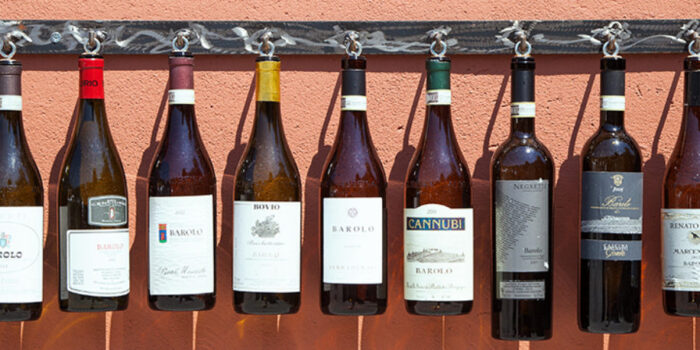
Anyone who likes red, complex and full-bodied wines drinks Barolo. This king among wines shows that you know what you’re doing, because a bottle of Barolo is a statement. But above all, it’s the wine for the connoisseur with a healthy bank balance. So what’s so special about this Italian tipple?

Barolo is not a wine for the faint-hearted. It’s a true food wine, with spicy tannins and plenty of acidity. It comes from the northern Italian region of Piedmont and is made from the Nebbiolo grape. Don’t be fooled by its light colour: the flavour is powerful and the aroma complex. It’s meant to be enjoyed with hearty dishes and cheeses. A wine like this needs to mature for years before it’s truly delicious. And even then, it still has quite a bite.
The grape and its roots
Nebbiolo is a difficult grape. It’s sensitive to weather conditions, soils and differences between daytime and nighttime temperatures. This means that the wines can vary considerably. From vineyard to vineyard, from year to year, but certainly from winemaker to winemaker too. Only under perfect conditions does Nebbiolo become a true great wine. But once you’ve got a good one, it has depth and finesse, with beautiful tannins. With refined aromas and flavours of liquorice, tobacco, clove and leather. But also roses, mint, bitter cherries, blackberries and dried fruit. And a bottle like this only gets better over the years.
High, dry and sunny
The Barolo wine region lies southwest of Alba. It’s a fragmented area on steep, south-facing slopes around the town of Barolo. It has the highest status under Italian wine law—the so-called DOCG—because conditions there are ideal for the demanding Nebbiolo. There are also different styles within the region. The somewhat fruitier, more approachable wines come from the limestone soils around La Morra and Barolo. The truly powerful ones come from the poorer sandstone soils around Serralunga d’Alba, Monforte d’Alba and Castiglione Falletto. The best wines come from the highest vineyards with the most sunshine. Because more sun simply means happier grapes.
Useful facts:
DOCG – Denominazione di Origine Controllata e Garantita: the highest classification in Italian wine law, comparable to the French AOC/AOP (34 throughout Italy)
Barolo – mandatory ageing for at least 3 years (18 months of which in wood)
Barolo Riserva – mandatory ageing for at least 5 years (2 years of which in wood)
Sottozone – (cru) vineyard: the grapes come from the same (special) vineyard.
Barolo vs. Barbaresco
A good Barolo is difficult to compare with anything, except its neighbour Barbaresco. Because, just like Barolo, Barbaresco is made from the Nebbiolo grape grown in vineyards on the best south-facing slopes. And yet there are differences too. The Barbaresco soil is somewhat richer in limestone and the climate slightly milder. That’s why the wine is somewhat softer in flavour, with less astringent tannins than the average Barolo. In general, Barbaresco will come across as more approachable to wine drinkers (you can also see that friendliness reflected in the price).
Price
For a decent Barolo, you’ll pay at least around €40. Making a true Barolo takes a lot of time, care and money. So when you see one on offer for a tenner, you should ask yourself what you’re buying. There’s a good chance you’ll end up with a poorly made wine or a so-called barolino (the ‘baby’ Barolo from mediocre vineyards). Because, as we’ve said before here on FavorFlav: budget Barolo doesn’t exist. Don’t want to pay too much? Then simply buy something else.
Good producers
There’s an ongoing battle within the region over the best Barolo style. The traditional camp with Rinaldi (long-aged, classic, austere) versus the modern camp with Angelo Gaja & Elia Altare (ripe, concentrated, barrique-aged). A few top producers in a row: Rinaldi, Beni di Batasiolo, Angelo Gaja, Elio Altare, Cavallotto, Vietti, Luciano Sandrone, Parusso, Cantine Fontanafredda, Pio Cesare, Roberto Voerzio, Sordo Giovanni.
Read also:


