


Cooking School: How to Make the Perfect Pan Sauce
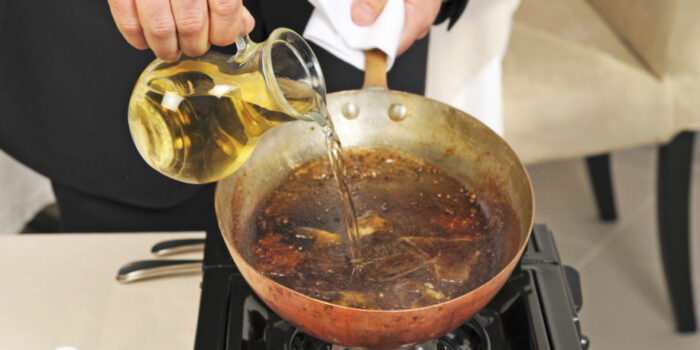
Do those stuck-on bits at the bottom of the pan go straight into the dishwasher at your place? Whoa, stop right there! With a little tender love and care, you can turn them into the most delicious pan sauce in no time. We’ll explain how.

I’ll just admit it. There are plenty of dishes I only eat because I can dip my bread into a divine pan sauce. Sometimes I make do with the juices and bits left in the (roasting) pan or baking dish, but for the real deal, deglaze everything and turn it into a beautiful sauce. Don’t let the jargon put you off—it’s definitely not difficult.
Searing
Deglazing is simply adding liquid to loosen the stuck-on bits in the pan. Those bits have an enormous amount of flavor (thank you, Maillard reaction), and are the perfect base for your pan sauce. So first, you need to sear some meat. Steak and chicken thighs (with bone and skin) are favorites, but a delicious pork chop also makes a wonderful pan sauce.
Sear the meat in oil; butter may burn. Continue cooking the meat as you normally would. While you let it rest, you can continue with the sauce.
No nonstick
You won’t get those delicious dark crusty bits that form the base of your pan sauce when using a nonstick pan. Just use that pan for your pancakes. Want a flavorful pan sauce? Then stay well away from it.
Flavorings
As soon as you’ve removed the meat from the pan, add some extra flavorings. If the pan is too dry, you can also add some extra fat at this point. Butter is fine during this step, since you’ll be cooking less intensely and for less time. Don’t add pepper and salt yet—you’ll be reducing the sauce later, and you don’t want to end up with an extremely salty sauce.
A finely chopped shallot or garlic always works well. You can also crush garlic cloves and add them to the pan whole. You can also add carrot or celery cut into brunoise. Mustard seeds, black peppercorns or even coriander seeds work too. Have some thyme or rosemary at home? Toss it into the pan. Keep stirring well so nothing burns, and cook for about 3–5 minutes.
Deglazing
Are your onion, garlic and any vegetables soft, and are the spices releasing their aromas nicely? Time to deglaze! If all goes well, the liquid will loosen all those flavorful stuck-on bits, bringing all that flavor into your sauce. Wine is a favorite for deglazing because it also contains some acidity, but stock is absolutely delicious too. In the latter case, you could add a drop of lemon juice or let a strip of lemon zest simmer along with it.
You don’t need much liquid—150–200 milliliters should be enough for four people. Reduce the liquid by about half.
Finishing
How do you upgrade that reduced sauce into a restaurant-worthy sauce? Butter. Remove the pan from the heat and add a few small knobs of cold butter. This makes the sauce extra smooth, creamy and flavorful. Season with salt and pepper and serve with the meat.


