



Do you know these ‘forgotten’ cuts of meat?
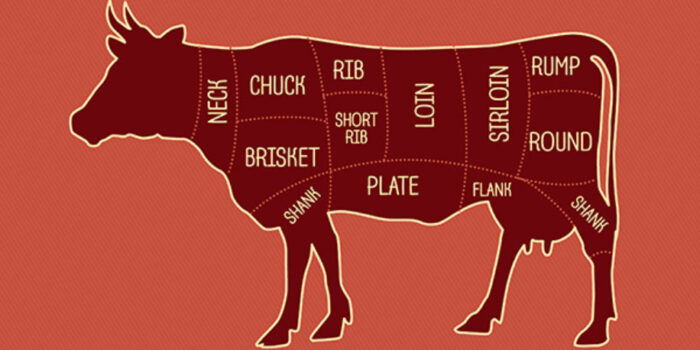
We all know tenderloin, entrecôte and steak, but increasingly, lesser-known cuts of meat are also appearing on menus. Have you come across these four, for example?

Jodenhaas
Also known as: Shoulder tender or diamond tender
Where? A steak from the front section of the beef. It is located on top of the shoulder blade and got its name because, due to their dietary laws, Orthodox Jews are not allowed to eat meat from the hindquarter.
What? Jodenhaas is shaped like a tenderloin. The color is fairly light and the texture beautifully fine. Because this muscle has no working function, it is exceptionally tender and somewhat less intense in flavor.
How? It is best eaten raw (finely chopped as steak tartare), or cooked rare or medium-rare. You can also use it to make a beautiful beef Wellington.
Runderezel
Also known as: Little donkey, groin steak, sirloin flap, aguilette baronie, tri-tip
Where? Runderezel comes from the hind leg, from the groin of the animal. Why “little donkey,” then? There are several theories, but the best one is that this cut of meat is so easy to prepare that it can hardly go wrong. Even a donkey can do it.
What? This immediately brings us to the second theory about the name: its shape is said to resemble a donkey’s ear. In any case, the meat has a dark color with light marbling and long fibers.
How? Like the Americans do it (although they call it tri-tip): on the barbecue or in the smoker.
Bavette
Also known as: Half-moon, flank steak
Where? Bavette comes from the “flank” or flank flap, on the underside of the animal.
What? It is a long, flat cut of meat with a deep red color. Because it has had to work hard, it has a firmer texture and plenty of flavor. Proper aging is therefore important.
How? The French way: sear it briefly, slice it thinly against the grain, serve with fries and shallots, and dig in.
Longhaas
Also known as: Onglet, hanging tender or butchers’ steak
Where? Longhaas is the diaphragm muscle of the animal and is located in the chest cavity near the lungs, hence the name.
What? It is a flat, elongated cut of meat and, like bavette, belongs to the category of working meat: muscles that the animal uses moderately or intensively, giving them lots of flavor but also making them somewhat tougher.
How? It is best sliced across the grain. You can cook it like a steak, but it is also very suitable for grilling or barbecuing.
Read also:


