


Foolproof gnocchi made this way
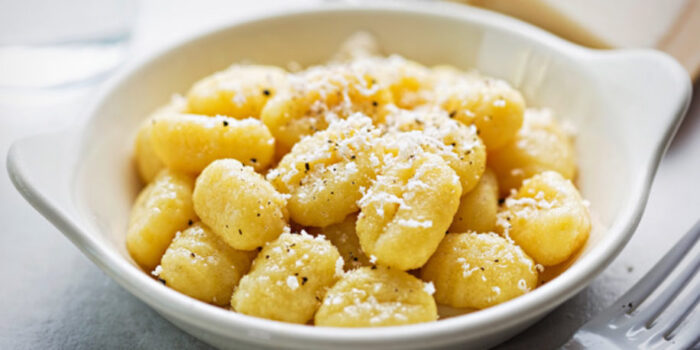
Njokkie, that is. Not gnokkie or gnotsjie, but njokkie. Now that you know how to pronounce it, it’s also good to know how to make the best gnocchi. With these tips, you’ll put a meal on the table that a true Italian nonna would be proud of.

Making the right gnocchi depends on many variables. So there isn’t just one way to make your gnocchi. If you use one type of potato, you’ll need to adjust the amount of flour accordingly. Still, there are a few tips that will ensure perfect results every time you make gnocchi.
The right potato
All well and good, pasta made from potatoes, but which potato should you use? According to many, the Russet potato is best suited to making gnocchi. It is fairly dry and has a high starch content, meaning you’ll need to add less flour at a later stage. This results in lighter gnocchi. Because Russets are difficult to find in the Netherlands, you can also choose Bintje potatoes. They are also nice and floury.
The right cooking method
Baking the whole potatoes (in their skins!) instead of boiling them drives out excess moisture. Again, that’s what you want, because this means you’ll need to use less flour, which can make gnocchi heavy. Place the potatoes on a rack, or on a layer of salt. The salt may draw a little extra moisture from the potatoes, but the main thing is that they don’t sit directly on the metal baking tray.
If you’re a beginner, add egg yolks to your dough. This helps the dough hold together better, both raw and in the pan of boiling water. The yolk does make the gnocchi heavier and denser, though, so if you’re thinking ‘I got this’, try making them without egg.
Potato ricer or potato masher?
Because you need to keep the potatoes light and avoid working them too much with your hands, the best way to break them down is with a potato ricer. It looks a bit like one of those Play-Doh clay presses. Or a garlic press, but for potatoes. If you don’t have one, you can use a potato masher. Just be careful not to mash them too much. They need to stay light and airy. This also lets some of the cooking steam escape right away.
Flour, but not too much
Depending on the type of potatoes you use and how much moisture remains after baking them, you’ll add flour. Add just enough to make a dough that holds its shape. Not too much, because then the gnocchi will become both grainy and less airy. The less flour you add, the better.
Handle as little as possible
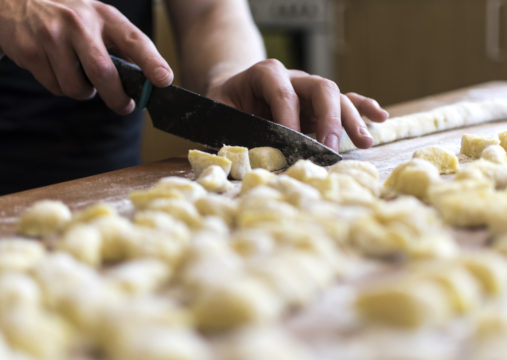
Because you need to mix the ingredients well without overworking the dough (otherwise your potatoes will become gummy), fold the dough in half several times with a spatula. Gently flatten the folded dough with your hands, then fold it in half once more. Once it is well mixed, shape it into a log and chop it into small pieces.
Gnocchi board
This may be the most useless object to have in your kitchen, but it is also one of the most fun. Those ridges in your gnocchi? You make them by rolling it over a kind of spatula with grooves in it. You can find a gnocchi board like this on Amazon.
Of course, you can also just use a fork. The ridges are meant to help the sauce cling properly to the gnocchi. A more enjoyable flavor experience, in other words.


