Is this Chinese? Well, no
Do you also always enjoy getting some satay at the Chinese takeaway? With one of those little plastic bags of prawn crackers? Or are you more of a babi pangang person? Then you’ll be in for a surprise in China if you try to order it. Because these dishes from the ‘Chinese’ takeaway don’t exist in China.

Satay
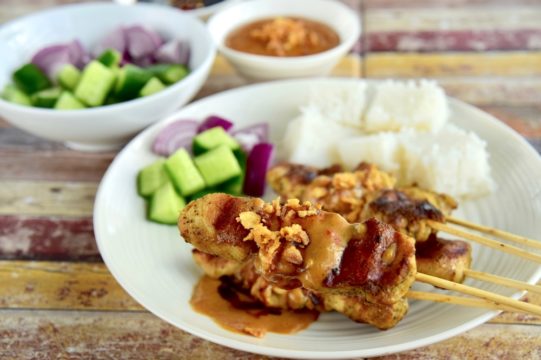
This dish of pieces of marinated meat on a skewer, often served with peanut sauce, originates from Indonesia, just like prawn crackers (chips made from fried shrimp dough) and the aforementioned peanut sauce. They came to the Netherlands after WWII with people of Chinese descent from the Dutch East Indies.
Foe yong hai
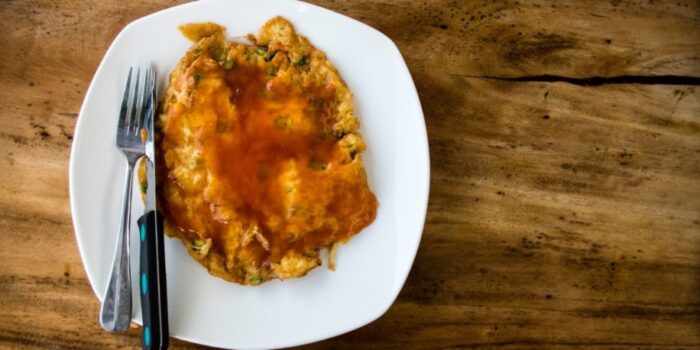
The omelet in tomato sauce was once developed especially for the Dutch people who returned from the former colony of the Dutch East Indies around the 1950s. Many existing Chinese eateries in the Netherlands spotted a new market. They recruited Indonesian cooks and began calling themselves ‘Chinese-Indonesian’. Their menus featured a mixture of Chinese and Indonesian dishes. Or, as in this case, dishes adapted to the Dutch palate.
Babi pangang
Roast pork. Babi is Malay for pork and panggang means roasted. It is also a very popular dish in Indonesia, where it is spelled babi pangang with one g. It is the fatty (and therefore flavorful and crispy) version of the Cantonese specialty char siu, made with lean pork. Babi pangang probably is originally a Chinese dish, by the way. But then we have to go all the way back to the nineteenth century.
Spring roll
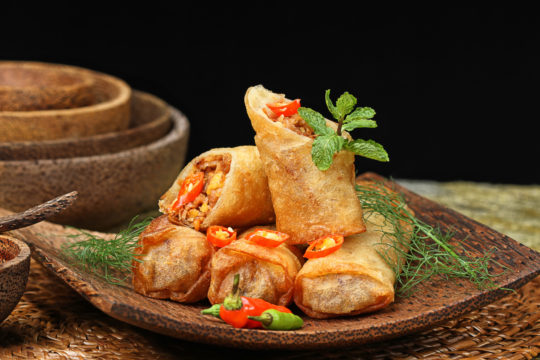
Who doesn’t occasionally eat them at the market? Vegetables and optionally meat or shrimp tightly rolled in a thin sheet of rice dough and then deep-fried. You’ll find variations in Vietnam (also raw: not deep-fried), Indonesia, Thailand and the Philippines, among other places. But not in China.