



Making tapas? Put this on the table
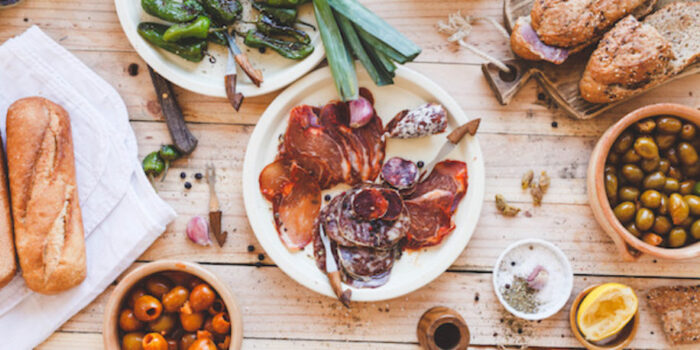
When I’m on holiday in Spain, I eat endless amounts of tapas. So much that I don’t need any more for the rest of the year. Although: now that summer is approaching, and because I’d rather stay at home due to corona, I’m starting to get the urge again. Do you also feel like eating tapas, preferably as many as possible? Then put these bites on the table.

Aceitunas
Spanish for olives. They are an indispensable part of any selection of tapas. Want marinated olives? Don’t buy a jar of ready-made ones at the supermarket, but go to a good delicatessen or marinate them yourself. For example, go for black olives with capers and thyme. Or make quick pintxos and skewer green olives, anchovies, pickled green pepper and gherkin onto a stick. You’ll find the recipe here.
Almendraz
That’s Spanish for almonds. The tastiest option is to buy unsalted almonds and roast them briefly. This gives them more flavour, much more than when you buy them as they are in the shop. You can roast them in the oven, but frying them in a pan with olive oil gives the nuts extra punch and bite. Quick and simple. Tip: don’t throw away the used oil—it now has an almond flavour and is extra delicious in your vinaigrette, over fish or for dipping your bread in.
Gambas
We don’t even need to think about it: we want gambas al ajillo, a dish full of piping-hot prawns, chilli pepper and garlic, no matter what. If you’re making this tapa yourself, preferably choose tiger prawns or langoustines. Fry them briefly and let them simmer in the pan for a moment after taking it off the heat, then top the prawns with a little sea salt and finely chopped parsley.
Patatas
In Spain, they know exactly what to do with potatoes; they make the most delicious creations with them. Naturally, the famous patatas bravas, thick wedges of fried potato with plenty of aioli and tomato sauce on top. It’s a great tapa for beginners because it’s fairly easy to make yourself. At least as simple to put together, but a little more original: patatas revolconas, a dish of potatoes, pancetta and paprika.
Brochetas
Brochetas are small skewers of marinated meat grilled on a plancha (a flat grill). You could choose pork tenderloin, for example, marinated in garlic and oregano. Or make lamb skewers with ginger and cumin seeds and put them on the barbecue for a while.
Jamón
The simplest tapa of all is a board piled with thinly sliced Spanish ham. But which one should you choose? Serrano ham is always a good choice. If you want to try something different, go for Ibérico ham, a strongly flavoured and slightly sweet cured ham from a pig that eats only acorns. Need more tips? Check out our overview of lesser-known Spanish hams.
Croquetas
These small croquettes are filled with all kinds of ingredients and a super-creamy béchamel sauce. In Spain, croquetas filled with jamón are particularly popular. But if we’re going to make the effort to prepare this tapa ourselves—you don’t do that just like that; it’s time-consuming—we’d also like to try something new. So we recommend substantial croquetas con chorizo, but the creamy croquetas with spinach and goat’s cheese by José Pizarro and these ones with mozzarella and potato are at least as delicious.
Empanadas
Empanadas actually come from South America, but you’ll also find them in Spain. Dough is filled with all your favourite ingredients and then deep-fried. Mini empanadas are delicious as a tapa. For example, fill them with minced beef, finely chopped tomato and coriander.
Verduras
Vegetables belong on the table too. We definitely want stuffed piquillos—sweet red peppers. As for the filling: anything goes. Garlic rice, blood sausage, or fill them with chorizo and lime. In Spain, this tapa is often served on a slice of bread. Many vegetables—especially aubergine and courgette—are also deep-fried in a coating of tempura batter.
Anchoas
Yes, anchovies. In Spain, they are often eaten straight from the tin. Why not? You can immediately check the quality of the fish you’re dealing with, which is useful. Are there two of you? Then one tin is more than enough, because the flavour of tinned fish is very strong and you don’t want to eat too much of it. You can eat the fish au naturel and that’s perfectly fine. In Brindisa, the ultimate Spanish cookbook, we discover that you can also top tinned fish, such as anchovies, with some finely chopped vegetables—think grilled peppers and aubergine. You still leave it in the tin.
Speaking of fish: did you know that salzón, dried and salted fish, is also often served along Spain’s southern coast? It is cut into very thin slices and topped with a drizzle of olive oil. Very delicious, but hardly available for sale in the Netherlands. So bring some home when you’re on holiday in Spain!
Read also:
- Stock your Spanish pantry like this
- Hotspot: SAGARDI is even more delicious than your Spanish holiday romance (and completely corona-proof)
- 5 lesser-known hams from Spain


