


Step-by-step brioche making

There is no bread more rich, luxurious and decadent than buttery brioche. Light and soft on the inside, with that aroma when it has just come out of the oven… Making it yourself does require some technique, but this guide will make sure you get it right.

The most basic bread is made with flour, water, yeast and salt. Brioche is enriched with butter, milk and eggs. All rich ingredients that make the bread very rich and almost creamy. Unfortunately, yeast does not respond very well to fat, so sugar is added to get the fermentation process going. It is therefore also a slightly sweeter bread, but if you make it properly it is not too sweet.
Brioche has a wonderfully fine texture. You can make the most delicious French toast with it or simply eat it with butter and jam. You can also make light hamburger buns with it, and it is the perfect way to serve a delicious slice of foie gras. Oh, and the best cinnamon rolls? You make those with brioche dough too.
Soft butter
The soft texture of brioche comes from adding very soft butter. Before using it, really leave the butter at room temperature for an hour. This allows it to mix well with the dough and prevents any hard pieces from remaining. If hard, cold pieces of butter go into the bread, you will get a layered effect, which is precisely what you do not want with brioche. Good brioche has lots of tiny air bubbles, and that is thanks to soft butter.
Want to speed up the process by melting the butter? Don’t. Melted butter makes the dough too soft and sticky.
Kneading
Brioche dough is very difficult to knead because it is so soft. In addition, it is important to mix all the ingredients really well, and doing that by hand with such a soft dough is quite complicated. That is why almost every recipe recommends a stand mixer (such as a KitchenAid). Even Michel Roux, who does everything by hand, uses a stand mixer for his brioche dough.
Do you have a stand mixer? Great. Are you already about to click away because you think you cannot make brioche without one? Wait a moment. Kneading by hand is absolutely possible. Brioche has, after all, been around much longer than the KitchenAid; it is just a little more complicated. This video explains the kneading technique clearly:
Rising & chilling
Let the dough rise for approx. 2 hours in a warm place until it has doubled in volume. This is required in every recipe and creates an airy loaf. What happens next varies between recipes. Most recipes state that the bread must be refrigerated for at least 6 hours so that the butter becomes firm again. The time in the refrigerator also helps with gluten development. Michel Roux uses a chilling time of 6 hours, while Larousse recommends only 1–1.5 hours. There are also recipes that do not chill the dough at all. Confused yet?
As a rule, allow for a chilling time of at least 6 hours. This sounds long, but it actually works perfectly. Make the dough in the evening, put it in the refrigerator overnight and bake it the next morning. Hello, freshly baked bread for breakfast! Do you still want a quicker brioche? Do not adjust the chilling time in the recipe; instead, look for a recipe where the chilling time is already short or absent, as the recipe will have been designed accordingly. In my experience, a longer chilling time really does result in tastier bread, but sometimes you are in a hurry. I get it.
-
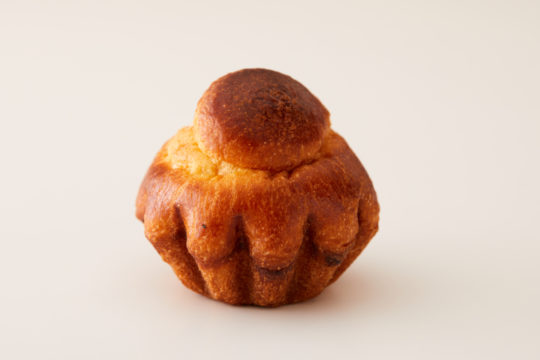
- Brioche Parisienne
-
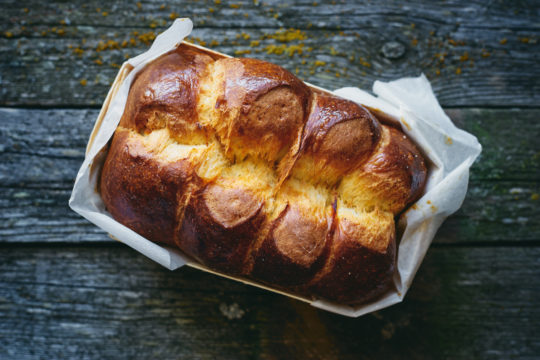

- Briochebrood
-

- Hamburgerbroodje
Shaping
After chilling, it is time to shape the dough. With brioche, you have plenty of options. The most classic shape is a Parisienne, in which a large ball of dough goes into a special mold and a small ball is placed on top. A mousseline is a narrow, very tall round mold.
Don’t feel like tracking down special molds? Simply bake your brioche in a loaf or cake pan and cut it into slices. Much easier and just as delicious. Or make small balls and arrange them against one another in the pan, so that after baking you can pull the pieces of bread apart. Or make hamburger buns. In any case: shape the dough as desired and let it rise for another 1.5 to 2 hours until it has grown again (approximately doubled in volume, or just slightly less).
Shine bright like a diamond
How do you get that luxurious glossy coating on brioche? With an egg wash. Mix 1 egg with 2 tbsp water or milk. Brush it over the bread just before it goes into the oven.
Baking
The temperature and baking time depend on the size of your loaf, but in any case, do not bake it at too high a temperature. Somewhere between 180 ºC and 200 ºC is good. Our favorite recipe is Michel Roux’s (this one, to be precise). For the classic Parisienne, he bakes the dough for 15 minutes at 200 ºC and then for another 30 minutes at 180 ºC.
Resting
Let the bread rest for at least 20 minutes after it comes out of the oven. This allows the bread to become a little firmer and more solid again. If you slice it immediately after it comes out of the oven, it is guaranteed to crumble apart.
Also read:
- Bake bread like a pro
- Emma’s food annoyance #18: paying for bread
- Brioche con gelato
- Cinnamon brioche with peach and mascarpone


