



3 moments when you really don’t need to finely chop garlic
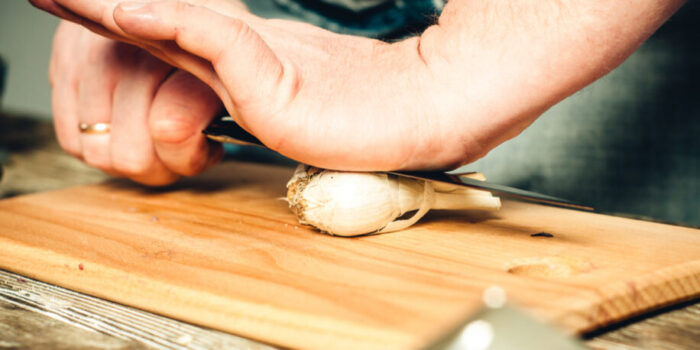
Finely chopping garlic: I don’t know many people who consider this their favorite chore. Of course, I’m willing to put up with a lot for a fragrant pasta sauce, a rich stew or a deliciously spicy dressing, but to be honest, fiddling around with garlic and the smell of it on my chopping board and hands sometimes just puts me off. If you feel the same, this might be liberating news:

You don’t always need to finely chop garlic! Admittedly, most recipes say to add finely chopped garlic, but if you experiment a little here and there and get to know your own preferences and taste, you’ll see that you can sometimes get away with skipping that step. What you can do instead depends on what you’re making…
Skip the chopping for soup and stews
These dishes spend a relatively long time on the stove, and there’s enough moisture and heat to break down the garlic’s cells (releasing the flavor and aromas, which is normally what you do by finely chopping it). To get that process started more quickly, you can still give the peeled garlic clove a good whack (also give it a small whack before peeling, by the way, to make the skin come off more easily). You can also perfectly season a soup that’s ready quickly with a crushed clove. Just don’t forget to fish the bruised cloves out before serving.
Slices are often perfectly fine
Slicing a garlic clove is just a little less hassle than chopping it. This is delicious with pasta, for example: slices of garlic gently fried in oil or butter until slightly caramelized. Or fried a little longer until just golden brown and crisp after cooling; unbelievably delicious over a simple plate of spaghetti with crispy breadcrumbs and parsley, or over a bowl of perfectly steamed rice with some broccoli and chili oil. Tip: slice the peeled garlic clove VERY CAREFULLY on a mandoline. And don’t forget: sacrifice that final piece.
Grate it deliciously on a Microplane
This is what I do most often, but you do need to be careful that finely grated garlic doesn’t burn. Nobody wants bitter garlic, so think carefully about when you add it to the pan. Actually, this technique is best used when you need (a little) raw garlic, such as in a delicious vinaigrette. Grating also works well for marinades, because you’ll ultimately remove the meat, fish or tofu from the marinade anyway. The garlic (grated at its sharpest) has then done its job, but it won’t be fried along with or burned.
Also read:


