



5 Japanese Desserts
Japanese desserts are often too beautiful to eat. They are made with an enormous amount of precision, and every single detail has been carefully considered. From sticky rice cakes to colorful sweets made with bean paste: we dream of trying them all at least once.

Monaka
Unlike the creations mentioned above, this dessert doesn’t look particularly spectacular. These two dry and airy wafers aren’t very sweet either, as they are made from beans. The two wafers are stacked on top of each other with a layer of jam or chestnut paste in the middle. A sort of sandwich, in other words. These days, varieties with vanilla cream, ice cream and plenty of whipped cream are also available.
Mochi
Mochi are round, pastel-colored cakes made from a paste of glutinous rice. The outside is sweet and sticky, similar to marzipan, while the inside is filled with red adzuki beans or ice cream. The filling is mainly intended to make the little cake ball less sticky. Don’t confuse this sweet dessert with dango. Although these little balls look and taste the same, they are made from a dough of rice flour and water and are served on a stick.
https://www.instagram.com/p/Be4j4b5FeRv/?taken-by=kyowaken
Taiyaki
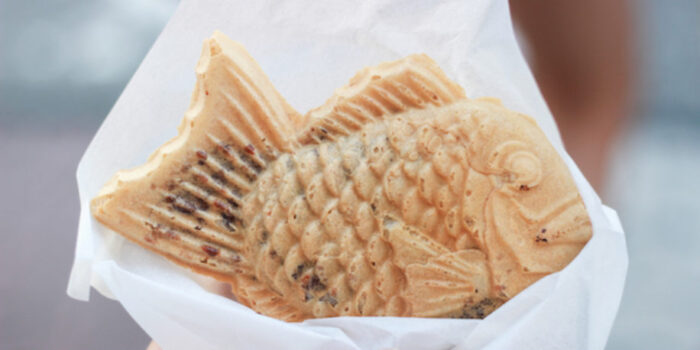
You may have seen it pop up on Instagram: a fluffy fish-shaped waffle. In Japan, they are available on almost every street corner. The fish’s mouth is often filled with sweet treats. Usually, that means brightly colored soft serve, but FavorFlavs Emma once scored a sugary version filled with custard. In trendy taiyakishops in New York, all the rules go out the window, and you can also choose fruit, chocolate, cookie crumbs and popcorn.
https://www.instagram.com/p/BcsD27TATcz/?taken-by=wearelapecera
Mitsumame
The ultimate Japanese dessert: a bowl containing agar-agar (jelly cubes), adzuki beans, dango, peach, cherry, pineapple and a type of Japanese mandarin. What we find most fascinating are the cubes or sometimes even little fish made of jelly, although they actually have no flavor.
Wagashi
This delicate Japanese sweet is made from red bean paste: a paste that is easy to knead into beautiful shapes. In Japan, they often still do this by hand. From fish, flowers and leaves to nectarines and oranges: anything is possible; there are hundreds of variations and types. Higashi, for example, is a dry sweet, while namagashi – an expensive type of wagashi – contains much more water.


