



5 things at the French butcher’s that shock Dutch people
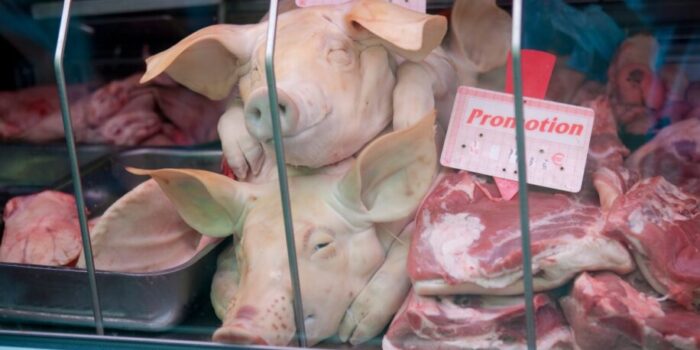
According to tradition, the profession of butcher has existed since antiquity. But let’s be honest: it only truly became a profession when it was regarded as such in medieval France. Because the French naturally have the exclusive right to everything related to food. And yes, a visit to a French butcher’s can be quite a challenge for Dutch people. For enthusiasts, we’ve listed the five horrors-or-delights you’ll find at the French butcher’s.

Privileged men
In the past, practicing the butcher’s trade was reserved for privileged families who enjoyed a special social status. From the moment these tradesmen – feminism was still a long way off – began to join forces, they formed a powerful guild in Paris.
And do you know the story of the butcher who inspects his own meat? In the 14th century, the Grande Boucherie de Paris was founded, representing almost all the butchers in the capital. This club introduced rules and bans and acted as an inspector of the butchers’ operations and the quality they delivered.
Over time – and we’re talking centuries here – one association was replaced by another. French eating habits changed, another revolution disrupted the butcher’s trade, enfin, it was all quite a hassle.
A cow is a cow
Things settled down when the Confédération Française de la Boucherie, Boucherie-Charcuterie, Traiteurs (CFBCT) was founded in 1894. This professional organization for artisan butchers is still active and brings together 18,000 tradespeople. There are a few modern thinkers among them, but most of their slaughtering colleagues are quite conservative in outlook. A cow is a cow, a pig is a pig, and we do everything possible with them.
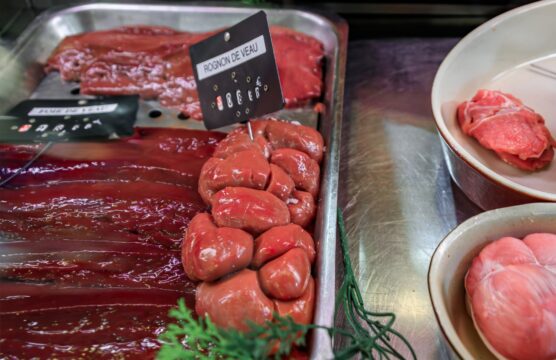
5 horrors-or-delights at the French butcher’s
And the fact that they put their money where their mouth is becomes clear when you walk into the shop of such an animal-loving butcher and take a look in the display case. Every day, it contains things you’ll never, ever find at the average Hergo butcher’s – Hergo a butcher’s? Meat boutique would be more accurate. So, for enthusiasts, here are the five horrors-or-delights at the French butcher’s:
- Cervelle de veau; veal brains, that is. Lovely and tender, as a croquette or beignet. Or boiled, with a caper and lemon sauce. Also nice: cervelle d’agneau (lamb’s brains).
- Tête de veau; there isn’t much left of the calf if you also use the head. It is boiled and later served with a sauce gribiche. Just try it once. Not at home, but at a rural auberge.
- Oreilles de porc; pig’s ears. Grilled or deep-fried, they are crispy and tasty. At least, that’s the idea.
- Cœur de bœuf; no, not that large tomato, but simply beef heart. Fry it like a steak – seignant, please… can you picture it? – or stew it in a hearty sauce.
- Testicules de mouton; yes, there they are: sheep’s testicles. If you call them frivolités, they become a rare delicacy.
Also read:


