



Annoying: why peeling an egg can sometimes be really difficult (but… we have the solution!)
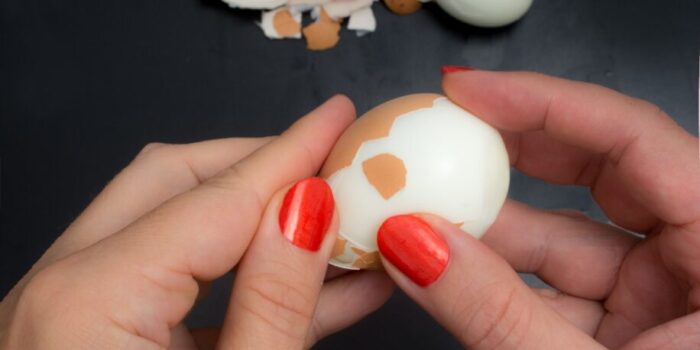
A perfectly boiled egg is a breeze with this tool, but then peeling the egg perfectly is often a lot less easy. With these four tips, peeling an egg becomes… a piece of cake!

First of all, it’s good to know that fresh eggs are much harder to peel than eggs that are already about 3 days old. That’s because the egg white and membrane are still very close to the shell when the hen has just laid the egg. After a few days, a little air forms between the membrane and the shell, which makes the shell easier to remove. But of course, we prefer to eat our eggs as fresh as possible.
This is how you prevent pieces of egg white from sticking to the shell until you’re left with almost no egg at all.
Shock them
Everyone knows this method: after boiling the eggs, briefly ‘shock’ them under cold water. Because the temperature suddenly changes from hot to cold, the egg is shocked and the egg white contracts slightly, creating more air underneath the shell and making it easier to peel.
Shake in a glass
The second option for having your egg peeled within 5 seconds is to put the egg in a drinking glass with a layer of cold water. Then place your palm over the glass and shake it back and forth until the shell comes off (tip: do this over the sink). But only use this method if the eggs are hard-boiled, otherwise you’ll end up with a slimy mess in the glass. Rrrr!
Spoon
After shocking the egg under cold water, you can also remove it from its shell with a spoon. To do this, peel away a small piece from the bottom of the egg and place the spoon between the egg and the shell. Move it around the egg while gently pressing the shell upward so it comes off.
Egg piercer
Piercing a hole in the bottom of the egg saves you a lot of peeling struggles, and ensures that you can always peel your egg perfectly, no matter how fresh it is. Piercing a hole in your egg before boiling it not only prevents the shell from cracking during cooking, but also makes the shell easier to separate from the egg white because, during shocking, water enters between the egg white and the shell through the hole.
Also read:


