



Bulgur, freekeh, or couscous: what are the differences?
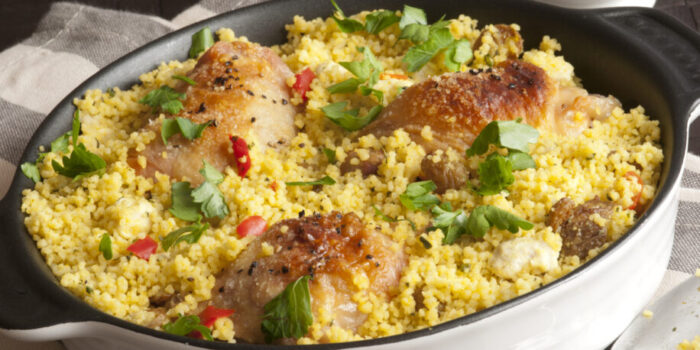
So you’re happily broadening your grain repertoire (you’d already progressed from couscous to pearl couscous), when suddenly you find yourself standing in front of the shelf, staring at a packet of bulgur with a puzzled look. And next to it: freekeh! What the freakeh is that supposed to be?

Don’t panic, we’ll help you get started. It’s absolutely great to try different things; you have to eat every evening anyway, so make it fun! Vary things and be bold, and with this knowledge under your belt, you’ll see that it’s all perfectly accessible…
Couscous
You probably already know couscous – perhaps it was the first carbohydrate-related adventure you embarked on after mastering potatoes, rice, and pasta. It is essentially finely ground hard white wheat dough, or a kind of super-small type of pasta. The flavor is neutral, just like cooked pasta. Delicious with chicken in plum sauce, or anything else that you prepare generously in sauce so you can smother the couscous in it. You only need to soak or steep couscous, but beware: that’s only if you want to do it very quickly.
Pointless violence
Because steeping is torment, according to Nadia Zerouali, co-author of the wonderful cookbook Souq, Tables Full of Mezze. Couscous should be steamed! In the video below, Nadia explains why that is the very best method. And if you really want to enjoy (talking about) preparing couscous, listen to the delightful Cheft podcast by food critic Hiske Versprille, in which Eric Corton learns how to make couscous from Nadia. No more pointless violence (thanks to Hiske), but steam it (three times!), for the fluffiest couscous of your life.
Bulgur
Almost as well known as couscous, partly thanks to, for example, the wonderful recipe for fresh tabbouleh by 24Kitchen chef Mounir Toub. You may also come across it as ‘burgul’; it’s the same thing. Unlike couscous, it is made from whole-wheat grain. The whole wheat is briefly steamed or boiled, dried, and then cracked. Because the pieces are small and partly cooked already, bulgur is ready quite quickly. The flavor is slightly nutty (because it’s whole wheat), and you can also use it as a substitute for rice. For example, with something easy like stir-fried strips of steak with tenderstem broccoli and a splash of oyster sauce.
Freekeh
The most fun one for last, because saying freekeh out loud three times in a row never stops being funny. Freekeh is also made from wheat, so none of these varieties are gluten-free. The main differences from bulgur are that freekeh is made from very young wheat harvested early, and after harvesting it is not steamed or precooked but roasted. Because of that young wheat, it can have a greenish hue, and the flavor is somewhat smokier than bulgur. Delicious! You’ll usually find it cracked, but sometimes you’ll come across whole grains. If you buy those, wash the freekeh thoroughly first and start with cold water rather than boiling water. What to pair it with? Try it with this fragrant Mediterranean chicken stew, replacing the couscous with freekeh. Martha Stewart will be proud of you!
Also read:
- How do you actually make really good couscous?
- Say no to brown rice
- Recipe: vegan meatballs with turmeric and pumpkin curry


