



Delicacies from Limburg
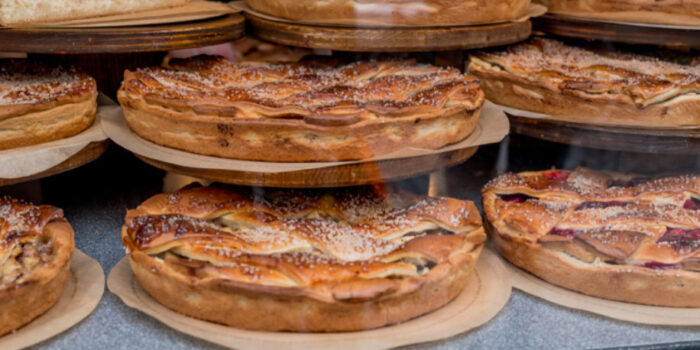
We all know the asparagus from Limburg, also known as the white gold (available until 24 June inclusive, so stock up quickly). But Limburg cuisine is so much more than that. Do you already know these delights?

Vlaoj
Vlaai, that is. Made with fruit grown in Limburg. The krosjelevlaai mit sjoem, gooseberry pie with meringue, is so popular that it has been immortalised on a postage stamp. According to the original Limburg recipe, the filling is baked together with the base in a wood-fired oven. You will find a vlaai at every festive occasion: rice vlaai, cherry vlaai, custard crumble vlaai and apricot-linzenvlaai are favourites. Incidentally, these are not cut into twelve pieces the Dutch way, but simply into six deliciously large pieces. You are in Limburg, after all.
Zoervleisj
Officially made with horse meat, but nowadays increasingly also with beef. Zuurvlees owes its name to the marinade of vinegar. Don’t let that fool you: the sour taste of the vinegar is more than compensated for by the addition of gingerbread and (Limburg) syrup. The end product is therefore sweet and sour. Delicious with fries. Fries with sajs.
Make Mestreechs zoervleisj yourself? Then try this recipe from de Limburger. Near Maastricht? Eat your portion at Café Sjiek.
https://www.instagram.com/p/BQbJbyxlnFq/?taken-by=vertruffelijk
Nonnevot
There are days when even the people of Limburg push their vlaai aside. Although there are only 39 of those days a year. From 11 November through Shrove Tuesday (the Tuesday before Ash Wednesday), they celebrate carnival. And carnival calls for nonnevotten. The story goes that these bow-shaped pastries were named after nuns’ buttocks. Yes, really. Why? The nuns wore an apron with a bow hanging over their backsides. It is a tradition for dozens of Limburg bakers to gather every year during carnival to crown the ‘nonnevot of the year’. If you want your pastries to win that title too, you can use this recipe for nonnevotten.
Tête de veau
Don’t worry. You don’t have to take the name of this dish (calf’s head) literally. In the past, people mainly ate calf’s skull, ears, eyes and tongue, because it was a dish for the poor. Nowadays, tête de veau mainly consists of beef with mushrooms and a thickened tomato sauce. An egg is an essential part of it.
Livar Kloostervarken
The real Livar pigs—or rather, the pigs’ owners—must adhere to seven vows. For example, the pigs must have plenty of access to fresh air and wear a curl in their tails (a sign of health and good fortune). The pigs must be born and raised in Limburg, be raised by monks and eat only locally grown grain. Because they are used to human contact, you can come and pet them if you like. If you would rather just eat them, you can always make a pulled pork sandwich.
https://www.instagram.com/p/BIQXBxdg1OX/?taken-by=tom_hagenus
Herve cheese with syrup
It is surprising how strongly such a small square of cheese can smell. Don’t let that put you off. Herve cheese, from ‘the Land of Herve’, has a spicy and creamy flavour and is therefore delicious with a piece of Limburg rye bread and syrup. The syrup is, of course, also made from apples and pears grown in Limburg. By first precooking the fruit and then reducing it for three hours, the syrup develops a full flavour. The people of Limburg like to spread syrup on just about everything, but the combination with Herve cheese is one that will never disappoint.
Balkenbrij
Like tête de veau, balkenbrij was originally a dish for the poor. You use only a pig’s offal: head, liver and bacon. Together with buckwheat flour and herbs, you press this into a sweet blood sausage. Delicious with rye bread and, yes, syrup.


