


Dietitian advocates Ozempic menus: the new restaurant trend?
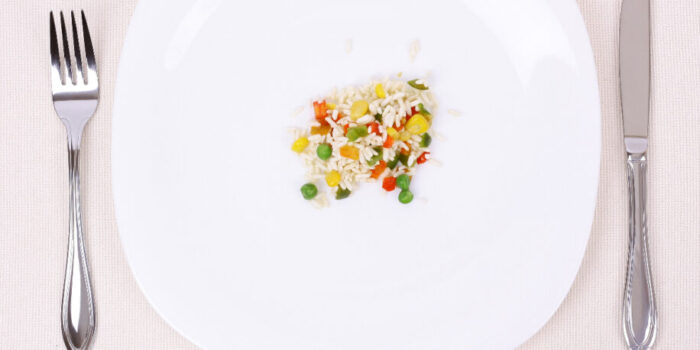
Eating at a restaurant is meant to be enjoyable. But what if you’re already full after three bites? For more and more people who use medication such as Ozempic or have had stomach-reduction surgery, that’s the reality. Enter: the Ozempic menu restaurant trend: smaller portions at a lower price. Smart idea or a hassle in the kitchen?

Why Ozempic menus?
Dietitian Michaël Sels sees it often among his patients, he tells VRT nws: they do want to eat out, but struggle with the enormous portions. “A pot of mussels weighing one and a half kilos simply isn’t doable anymore,” he says. It makes sense: medications such as Ozempic suppress the appetite and slow gastric emptying. The result: you feel full faster, but also feel nauseous more quickly if you eat too much.
Sels’s proposal: restaurants should offer smaller portions, with a proportionally lower price. Not only useful for people with smaller stomachs, but also a way to reduce food waste.
But why not simply eat less?
That’s a question that often comes up: why not simply eat half of what’s on your plate? Simple: people eat what they are served. And let’s be honest: ordering only a starter and then sitting with an empty plate while everyone else starts on the main courses feels rather miserable.
Eating isn’t only about filling up; it’s also about socializing and feeling like you’re fully taking part.
Already well established in America
In the US, the Ozempic menu restaurant trend is already fairly well established. At many places, you can choose a smaller portion, often cleverly marketed as a “light menu” or “petite portion”. In the Netherlands and Belgium, it’s still a matter of searching: the site kleineporties.nl is trying to point people toward restaurants that are embracing the trend.
Horeca Vlaanderen: in principle, in favor
Horeca Vlaanderen sees potential in it. In their view, small portions are relevant not only because of the Ozempic hype, but also because of the fight against food waste. Their “No food to waste” campaign has been emphasizing for some time that restaurants can afford to be more flexible.
But, they stress, the choice lies entirely with the operator. And that’s where the problem lies.
Restaurants aren’t always enthusiastic
Not all restaurants are eager to introduce Ozempic menus. With all-you-can-eat concepts in particular, it’s practically impossible. At Wok Dynasty in Sint-Martens-Latem, Belgium, for example, a sign says: “People who have had stomach-reduction surgery are not entitled to a discount.”
Owner Changying Wu explains: “We deliberately work with simplicity and transparency. A separate formula for small eaters makes things too complicated.” In other words: those who eat less pay the same.
Small portions aren’t the same as a discount
Sandra de Blaeij, founder of kleineporties.nl, understands the resistance but believes linking it to discounts is a misconception. “It’s not about eating more cheaply; it’s about choice. People want to be able to taste the full menu without overeating or feeling ill.”
Think of a mini portion of boeuf bourguignon or half a bowl of mussels: enough to enjoy the flavor, without a food coma afterward.
Benefits for restaurants
The Ozempic menu restaurant trend also offers opportunities, of course. Think of attracting a broader audience (people with smaller appetites feel welcome), creative menu options (tasting menus with smaller dishes), and upselling drinks (guests who eat less might well order an extra glass of wine).
Drawbacks for restaurants
Naturally, there are challenges too. More work for the kitchen (preparing smaller portions means creating more menu variations), price perception (guests sometimes automatically expect lower prices), and complex logistics, especially with buffets and all-you-can-eat concepts.
5 dishes that work perfectly as an “Ozempic menu”
- Half a pot of mussels: fewer shells, just as much enjoyment.
- Mini risotto: because honestly, after six bites you’re full anyway.
- Petite steak frites: everything you want, but in snack size.
- Smaller ramen bowl: all the delicious flavors without a balloon belly
- Tasting dessert: three mini treats instead of one giant one.
Will this really become a trend?
The question is: will this become as normal as vegan options on the menu? Or will it remain a niche?
The fact is that Ozempic and similar medications are gaining ground worldwide. Add the growing focus on health and sustainability, and you have a solid basis for the Ozempic menu restaurant trend. It could therefore easily become the next logical step in the hospitality industry.
You get what’s on the menu
Whether you’re a fan or not, the Ozempic menu restaurant trend highlights an interesting discussion. Should restaurants adapt to changing eating habits? Or is it simply a matter of “you get what’s on the menu”?
One thing is clear: there is demand for smaller portions. Responding smartly to that demand can bring restaurants not only goodwill, but also a broader audience and less waste. Perhaps the era of XXL portions is over—and the small portion is finally making its grand entrance.
Also read:
- 10 things restaurant guests do that they think are polite (but are incredibly annoying)
- How companies such as Nestlé and Unilever are cashing in on the Ozempic diet trend
- 8 bizarre and disgusting things restaurant guests do


