


Dining out and paying later: the future or a nightmare?
Paying later has become the most normal thing in the world. You order new sneakers, festival tickets or even a mini holiday and only pay weeks later. But in the hospitality industry? We don’t know this principle yet. Still, the question arises: will we soon be able to dine out and pay later?

In the hospitality trade magazine Misset Horeca, Bart Hoffman wonders whether ‘buy now, pay later’ will also make its way into the cafés, bistros and fine-dining restaurants of the Netherlands. Perhaps a bizarre idea: you order a sirloin steak first and only pay the bill weeks later. But hey, we once thought paying with a debit card was futuristic too.
Other countries are already doing it
In the United States, users of delivery services such as DoorDash and Uber Eats can already use Klarna: order food and pay later. In Germany and Sweden too, you can have meals delivered ‘on credit’. Restaurants are paid immediately by the payment provider, while the customer pays later – or in installments.
Paying later at the restaurant?
According to Edgar Rouwenhorst of Zenchef, it is only a matter of time before we see this in the Netherlands too. He expects us to start looking differently at the least enjoyable part of a restaurant visit (at least for the guest): paying. That final quarter of an hour is often a downer. Perhaps it could be improved, he says. And across the border, there are already high-end restaurants offering an experience that you can pay for later. He expects this option to become available in the Netherlands too.
No-shows or new target groups?
Still, questions remain. Does paying later lead to more no-shows – the irritating phenomenon Joris Bijdendijk has already complained about? Or do you attract new target groups, such as young people without immediate cash on hand but with an intense craving for truffle pasta?
According to Rouwenhorst, every entrepreneur must decide that for themselves. But he also issues a warning: you don’t want to become known as the restaurant where people with payment problems show up.
Psychological pitfall
Professor of Economic Psychology Wilco van Dijk can already see where this is heading. People make decisions in the moment. They order that second bottle of wine even though they cannot really afford it. He wonders whether encouraging this is compatible with good hospitality.
He also points to the lack of regulation. European legislation will not arrive until the end of 2026. Until then, companies can simply continue enticing people into debt, with all the consequences that entails.
Three courses on credit?
Imagine it: an evening in a chic restaurant, three courses, a wine pairing, perhaps an espresso martini afterwards. You pay nothing and think: I’ll deal with it later. Sounds like a dream, or a nightmare, depending on how good you are at financial planning.
Van Dijk argues that more expensive restaurants might be better off offering a savings programme instead of a payment plan. That way, you keep it exclusive and responsible.
Payment process in the hospitality industry
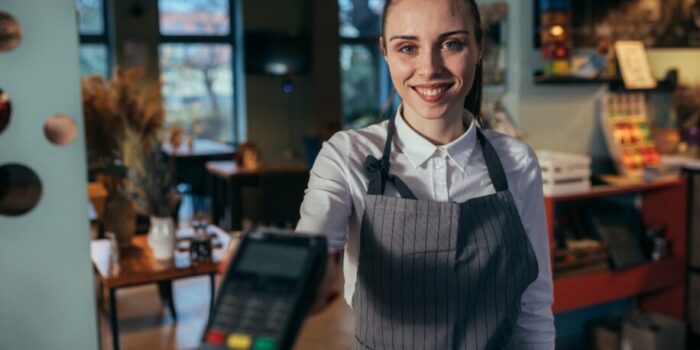
At Mollie, a major payment provider, they are seeing the trend too. Joris Rood says that the payment moment is shifting. Whereas it used to happen at the checkout, it now also happens at the table via handheld devices, or perhaps automatically afterwards in the future.
According to him, the entire payment process in the hospitality industry is changing. We already saw this with the new payment terminal with a tipping function. From booking to payment, the customer journey should be seamless. The fixed checkout? Outdated.
And what about Klarna?
Klarna confirms that it does not work with restaurants in the Netherlands, but is active worldwide. Around one-third of payments are settled immediately. And yes: if you pay late, you will receive a reminder. Clear enough.
So: should we want this?
Paying later in the hospitality industry sounds modern, but it also raises ethical, psychological and practical questions. The technology exists. Some customers want it too. But is the hospitality industry ready for it?
Perhaps food delivery should be the first to embrace it. Or perhaps it will remain a nice idea for fintech start-ups and payment providers. Until then: just pull out your own wallet after the tiramisu, if you ask me. Or do you see it differently? We’d love to know!
Read also:
- Real life: I can no longer afford to eat out
- Austrian restaurant charges 8 euros for an empty plate: bizarre or understandable?
- The police were called: the bill was such a shock to the guests
Source: Misset Horeca


