


Elderflower Kefir
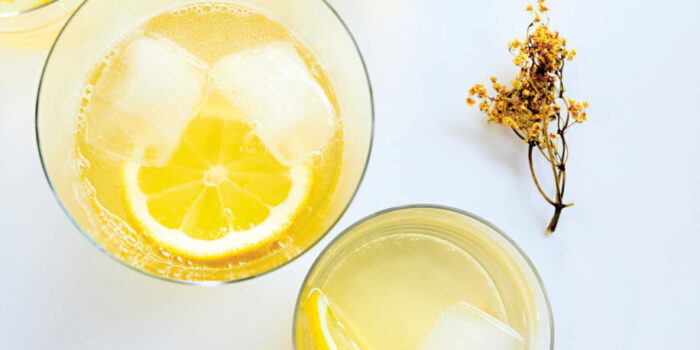
Fermented drinks are hip. Kombucha is popping up everywhere, but kefir (a fizzy fruit drink), cider and lassi are also becoming increasingly popular. The book Kefir & Kombucha contains more than 40 recipes for these trendy and healthy drinks. More delicious and better for you than soft drinks from the supermarket.

During fermentation, sugars and bad bacteria are converted by natural microorganisms into acid, gas or alcohol. This is delicious, but above all very good for you. Fermented drinks promote digestion, increase the production of enzymes and are a source of vitamins.
In Sweden, fläderblomssaft (elderflower syrup) is considered a harbinger of summer, a time when life takes place outdoors. Everyone recognises the smell and taste of the syrup as grandmother used to make it. Elderflower was long regarded as the most medicinal plant. We also enjoy drinking the floral beverage in winter. Dried elderflower is available all year round.
Method
1. First make the kefir. Put the fruit kefir grains in the clean jar. Add the light brown sugar, the lemon slices and the dried fig, cut in half. Pour in the water while stirring. Seal the jar airtight (or cover it with the cloth and elastic band).
2. Leave the drink to ferment in the jar for 24 to 48 hours in a dark, warm place (22 to 26 °C). If you use a lid, briefly open the jar every 24 hours to let some gas escape. You should see the grains ‘dancing’, and the fruit should float to the top due to the carbon dioxide. Taste regularly using the straw method: the longer you let the kefir ferment, the less sweet it becomes.
The fermentation time for kefir varies from 24 to 72 hours. If you ferment it for too short a time, it will become sweeter and have a laxative effect. If you ferment it for longer, the opposite happens and the kefir becomes drier. Taste the drink after just a few hours of fermentation. This trains your taste buds and helps you determine more accurately how long you want to ferment the kefir.
3. Remove the lemon slices and fig from the jar (use them in a pie or in yoghurt). Pour the rest through a sieve and funnel into the bottle, and seal the bottle airtight. Use the kefir grains for a new batch or store them (see info). Drink the kefir immediately at room temperature, refrigerate it or opt for a second fermentation if the kefir is not fizzy enough or if you like lots of bubbles.
4. Leave the bottle at room temperature for 24 hours. Note: kefir ferments very quickly. Release gas from the bottle from time to time so that the pressure does not become too high. Place the bottle in the refrigerator for a few hours before
pouring the drink.
5. Steep the dried elderflower in 200 ml boiling water. Allow the liquid to cool completely and pour
it through a sieve into a bottle containing kefir.
6. Let the drink ferment a second time for 24 to 48 hours. Refrigerate the drink for 24 hours before pouring it.

Title: Kefir & Kombucha
Author: Sebastian Landaeus and Nina Lausecker
Price: €17,95
Publisher: Good Cook


