



Give Me Another Oyster #1
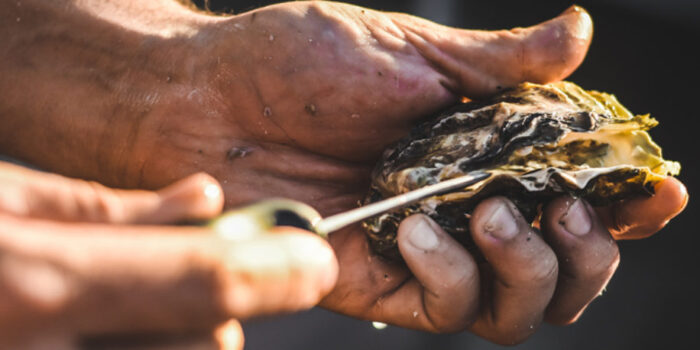
Oyster season has opened again, which means: time for an oyster. Especially now that fish shops are multiplying faster than rabbits and they all have the iodine-rich shellfish on the menu. But which oyster should we choose? The flat one or the plump one? Oysterman Marcus van den Noord of Zilt & Zalig shares his expertise on ‘the tear of the sea’.

Part 1: The Flat Oyster.
Oysters have three main categories:
1. Flat, Belon or European oyster.
2. Creuse or Pacific oyster.
3. Blue Point or East Coast oyster from the eastern side of the US. Currently unavailable here due to an import ban.
Flat
The original Dutch oyster is the Flat (Ostrea dulis). This flat oyster with a circular shell and nutty flavor was almost completely wiped out by the harsh winter of 1962/1963 and oyster disease.
To restore oyster farming, the Japanese oyster (known in the trade as ‘Creuse’) was introduced into the Oosterschelde in the 1970s. Unlike the Flat, this crooked, plump oyster is not susceptible to oyster disease. But the Flat is slowly returning to the waters of Zeeland as well.
The more zeros, the larger the Zeeland Flat oyster.
The famous Zeeland Flat comes with zeros, from one to seven. The more zeros, the larger the oyster. The very largest has no zero, but a name: Pied de Cheval.
Marcus: “The flavor is cumulative. The larger the oyster, the higher its iron and iodine content. That is precisely why oysters once became a starter. After eating one or more large Flats, you taste your main course better.”
Oysterman Marcus’s oyster bar tip
‘Catch by Simonis has a top-notch selection. If you can see past Scheveningen’s somewhat gaudy exterior, you can eat fantastic seafood there.’
Text: Marjan Ippel


