



Goat Cheese with Crisp Spring Wine
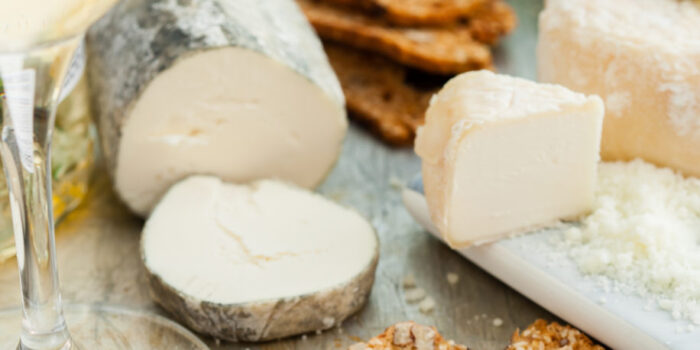
“A dessert without cheese is like a beautiful woman with only one eye.” So said the still highly regarded 19th-century gastronome, writer and bon vivant Brillat-Savarin. And cheese naturally calls for wine. But just as no two wines are the same, neither are any two cheeses. So with a fresh goat’s cheese like Crottin de Chavignol, you serve something different than you would with a creamy brie.

And yet we do it all too often. The traditional glass of port with a generously assorted cheese board. Or simply the leftover red from the main course. But there is no single wine that pairs with all cheeses at once. And goat’s cheese in particular is a category of its own.
The style of especially young goat’s cheese is pure, refined and mineral-driven. Fresh and dry, and often slightly nutty. Such a cheese has a high level of flavor and a characteristic tang, especially when it is made from raw milk.
For a suitable wine, look for a similar character and the same texture (the sensation in your mouth). Fresh wines, then, preferably with an expressive character and plenty of acidity. Because the basic rule when combining flavors is that one flavor should not overpower the other. Flavors should complement each other. And preferably perfect each other.
All that sticky sweetness makes the beautiful, mineral character of the goat’s cheese fade into the background, while the fresh wine is completely overwhelmed.
The same region
A general tip when pairing cheese and wine is to choose a wine from the same region. Because the flavor of cheese is true to its terroir. Many of those goat farmers are located in the Loire Valley. And, as it happens, that is a fairly extensive and beautiful wine region. The wines from that area therefore pair particularly well with such a fresh goat’s cheese.
A classic combination is the famous Crottin de Chavignol with a white Sancerre. This crisp Sauvignon Blanc, with its mineral, flinty character and fine acidity, creates an intense flavor experience with such a cheese. Other Sauvignon Blancs from the area—such as neighboring Pouilly-Fumé or a somewhat less complex Touraine—work wonderfully as well. But white wines from other regions, or made from different grapes, can also create a beautiful harmony. Think of wines made from varieties such as Riesling, Weissburgunder and Chenin Blanc. As long as they are dry, slightly grassy and have delicious fresh acidity. The kind of glass in which you suddenly taste spring.
Do be careful with the fashionable—and completely unnecessary—excessive use of honey
The pairing naturally goes beyond a selection of cheeses gathered on a board. Especially with dishes such as green asparagus with grilled goat’s cheese, or a simple spring salad with a somewhat younger variety, these wines are truly wonderful. Do be careful with the fashionable—and completely unnecessary—excessive use of honey. All that sticky sweetness makes the beautiful, mineral character of the goat’s cheese fade into the background, while the fresh wine is completely overwhelmed.
Don’t look in the bold and sultry category; go for fruity and light instead.
Older or spicier?
If you have a somewhat older or spicier cheese—such as a Tomme de Chèvre or a Sainte-Maure de Touraine—red wine is also a good idea. Don’t look in the bold and sultry category; go for fruity and light instead. Such as a lightly chilled Mâcon from Burgundy made from the Gamay grape. This wine actually has exactly the same characteristics as the white options mentioned earlier, but with a spicy red edge.
Or choose a more substantial white. A distinctive white wine from Savoie, for example. And isn’t that a coincidence? That is also where the Tomme de Chèvre comes from. This is how you keep discovering new flavors and possible combinations. Because, as bon vivant Brillat-Savarin put it 200 years ago: “The discovery of a new dish brings humanity more happiness than the discovery of a new star.”
And that’s exactly how it is.


