


How to: hotpot
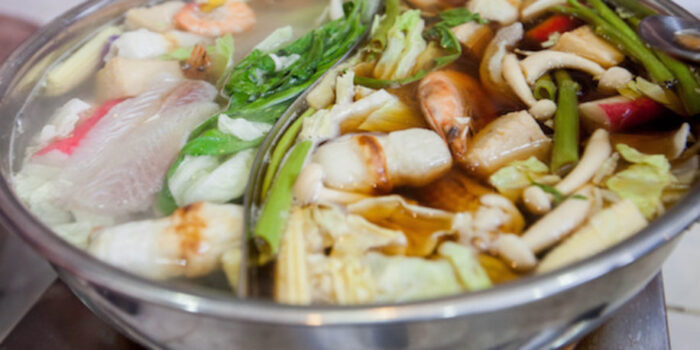
Fish balls, thinly sliced meat, vegetables and noodles: in China, they dip their favorite ingredients into piping-hot broth, only to fish them out again once cooked. It’s called hotpot, and every Chinese region has its own variation. We’re opting for the more relaxed southern hotpot and explain how to make it.

The pot
The hotpot itself is nothing more than a large metal pot with two sections. You simmer broth in each section. We understand that you may not have such a pot at home, but as a beginner, you’ll do just fine with a regular pot. Preferably a nice big one, in which you simply make one broth. Want two different kinds? Then choose two smaller pots. Just remember: you need to be able to keep them nice and hot, so you’ll also need two burners. Also handy: chopsticks and a fondue strainer, so you can scoop out everything you simmer in the broth afterwards.
Tip: get your wines from Ton Overmars
The broth
One half of the pot contains a clear broth, the other a somewhat spicier one. At the Asian supermarket, you can choose from hundreds of thousands of packets of ready-made varieties, but making one yourself is of course even better. If we may choose a clear broth for you, we’d definitely go for this homemade chicken broth. You can optionally give it a delicious touch with carrot and ginger. Whatever you choose: never fill your hotpot with boiling water alone. You sometimes read that this is fine too, because once you add ingredients, it will naturally develop some flavor. In reality, it’s quite disappointing.
The meat
We’re going for wafer-thin slices of steak and ribeye, which you can fish out of the broth again in no time. Or small beef meatballs. Lamb is also a must; in China, it may be just as popular as beef. We also want chicken breast and thigh, which can be sliced a little less thinly.
The vegetables
The meat may steal the show, but a real hotpot isn’t complete without plenty of delicious vegetables. They provide a lovely change of pace, as they’re a little less heavy. They also add delicious flavor to the broth.
In principle, any vegetable works, but above all, choose varieties that are firm and don’t become too limp when cooked. We recommend bean sprouts, broccoli, baby corn and snow peas. Bok choy is perfect too. With its thick stems, you can let the vegetable simmer along for a few minutes. Don’t cut it too finely. Another must: mushrooms. Chestnut mushrooms, shiitake, shimeji: choose your favorite. Going for larger varieties, such as portobellos? Cut them into quarters.
The fish
Do you love fish? Then this is the moment to indulge. When it comes to fish, absolutely anything goes in a hotpot: from squid and crab to shrimp and fish fillet. Choosing the latter? Don’t cut the fillet into overly thin slices, and keep your strainer in the hotpot to prevent the fish from falling apart and getting ‘lost’. Oh, and as far as we’re concerned, the shrimp are truly indispensable, as are fish balls. You can buy them at the Asian supermarket, but you can also make them yourself if you like.
Tofu
Don’t forget it, because tofu may well be the very best hotpot ingredient. We’re going for a somewhat firmer variety, but feel free to choose your favorite tofu. In any case, don’t forget to keep a close eye on it when you put it into the piping-hot broth. If you let the tofu simmer for too long, it will fall apart.
Noodles
Traditionally, you eat these at the very end. By then, the broth has plenty of flavor and the noodles absorb it well. We’re choosing rice noodles for the hotpot. Their soft texture makes them perfect for soups. Don’t forget: you often need to soak them in cold water for an hour before you can use them.
Toppings and sauces
At the table, you should definitely serve finely chopped fresh chili peppers, spring onions, toasted sesame seeds and cilantro leaves. Explore the Asian grocery store and look for toppings you think you’ll enjoy even more. Yes, sauce is allowed too! Obviously, plenty of soy sauce, but hoisin sauce is always on the table too, as are sesame sauce and a Chinese garlic sauce. Did you know that in China they also put out raw egg yolks to dip meat into?


