



How to: make pasta
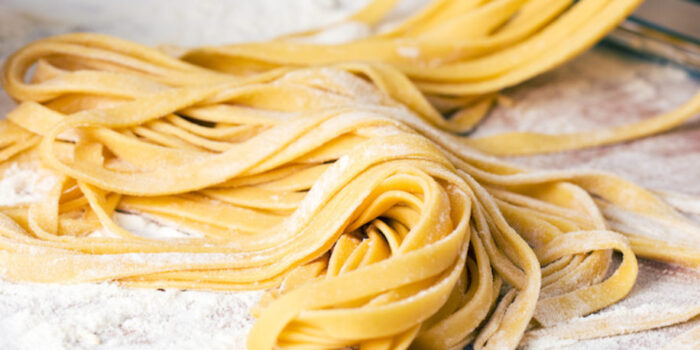
Making your own pasta may seem like an intimidating task, but it really is easier than it seems. You probably already have all three ingredients at home. Maybe you were even given a pasta machine as a gift once, which has been gathering dust for years. Then it’s time to use it.

Don’t have a pasta machine? Don’t panic, you can also roll out the dough yourself. It’s just a bit more work. A pasta machine looks great in the kitchen, and for less than thirty euros you can get a perfectly good one. FavorFlavs’ Emma has this pasta machine and it has lasted her for years.
Flour
Fine flour is best for making pasta; look for type 00 in particular if you can find it. It is as fine as talcum powder, which allows it to mix better with the egg. You can buy it at Italian specialty stores. If there isn’t an Italian specialty store near you, use semola flour. You can buy this at various supermarkets.
Semola is fine durum wheat semolina, made from durum wheat, also known as hard wheat. It is suitable for pasta because durum wheat contains more gluten than bread wheat. This helps it retain its shape better, for example in penne. Semolina is the coarse version of semola, but it is too coarse to use for pasta dough.
Egg
Opinions differ considerably when it comes to eggs: egg, no egg (yes, really, people do this), or more egg yolks than egg whites. In any case, go for egg. Pasta without egg isn’t tasty. Egg gives the dough a fuller flavor and makes it nicely elastic. Use 1 whole egg per 100 grams of flour. This makes enough for approximately 2 people. If you want to use more egg yolk, you can. More egg yolk makes the dough harder to mix, but gives it a fuller flavor. This pasta recipe uses more yolk than white.
The dough
Knead the dough on the counter. Make a kind of volcano out of your flour and put the egg and salt into it; loosen the egg with a fork. Mix the egg with the flour until the dough comes together. Continue kneading with your hands until a soft and smooth dough forms. Now knead the dough for about 10 minutes. If it is still sticky, add a little extra flour.
The dough becomes firmer the longer you knead it. You have kneaded enough once there are no more air bubbles in the dough and it is a firm, elastic ball. If you cut the dough and there are still air bubbles inside, knead it a little longer. Too lazy to knead by hand? If you have a food processor with a dough hook, put all the ingredients in it and knead for 3–4 minutes until the dough is ready.
Let the dough rest, covered, for 30 minutes. If you don’t let it rest, the dough will remain too elastic and won’t roll out properly. It will spring back too quickly, which means it won’t become thin enough. The dough will keep for 24 hours in the refrigerator.
https://youtu.be/c2yQVROymd4
With a pasta machine
If you use a pasta machine, set it to the thickest setting. Flatten a piece of dough with your hands and run it through the machine. Do this once or twice more so that the gluten develops and the dough becomes more elastic and therefore less likely to tear.
Then change the setting on your machine and run the dough through each setting two or three times. The sheet will become longer and longer, so cut it once it becomes unwieldy. Make the sheet of dough as thin as you like; for example, it should be slightly thicker for linguine than for ravioli.
Without a pasta machine
If you don’t use a pasta machine, roll out the dough by hand with a rolling pin. Don’t underestimate this—you really need to roll it very thin. Sprinkle enough flour over the counter, because if your pasta sticks to it, things will get messy. Roll the dough out to approximately 3 mm thick; it should be slightly translucent when you hold it up to the light.
The shape
Once your dough is thin enough, cut the pasta into the shape you want to use. Use the cutting setting on your pasta machine or do it yourself. An easy way to cut tagliatelle is to roll up the dough and then cut it into rolls, as shown in the video below.
Don’t leave the dough uncovered for too long, as it dries out quickly. Always cover the part you aren’t working with using a tea towel or plastic wrap. Fresh pasta cooks more quickly than dried pasta. Cook it for less time—approximately 4 minutes.


