



Maaslander introduces protein cheese bar: what exactly is in it?
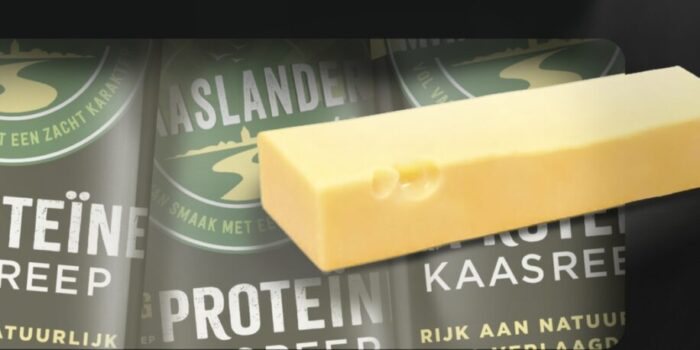
Maaslander is celebrating. They have launched the first cheese with ‘a high protein content’ on the market. A clever marketing ploy or something you can actually benefit from?

Protein seems to be the buzzword these days. Protein is an essential part of a healthy diet and plays a crucial role in the growth and repair of muscles, tissues and cells. The best natural sources of protein are animal products. Chicken, beef and pork, fish and seafood, eggs and dairy products such as milk, cheese and yogurt are all very rich in protein. Plant-based protein can be obtained from legumes, soy products, nuts and grains, among other things.
Extra protein: is it necessary?
The trend of adding protein to food products – even when they are naturally a source of protein (!) – has been going on for a while. Bars, shakes, breakfast cereals and even yogurt and cheese are being enriched with extra protein. But do you really need that extra protein? If you follow a varied and balanced diet with sufficient protein sources, there is no need to consume extra protein. You can easily get enough from regular meals.
Maaslander Protein cheese
If you do strength training or are trying to build muscle mass, your protein needs may be higher. Would you then choose a cheese bar? Maaslander hopes so: ‘The bars were specially developed to support muscle recovery after intensive training. The natural proteins in this cheese help your muscles recover faster, while the taste remains full and creamy, just as you are used to from Maaslander,’ they say.
The cheese used for the bar is a mature 30+ cheese. So no extra protein has been added to the cheese. What exactly is going on? It turns out that this is not just a standard 30+ cheese produced by Maaslander. They have matured this cheese for 18 weeks longer than a young 30+ cheese. Various maturation methods were tested to determine when the protein content is significantly higher while the taste remains delicious. The development process was certainly not easy, and according to Maaslander, it is definitely not simply a clever marketing ploy.
One euro per bar
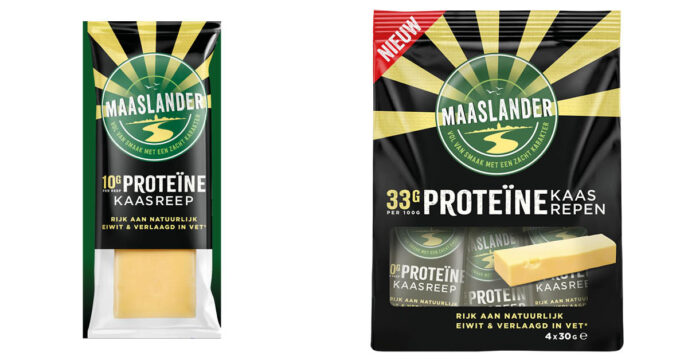
That longer maturation time and the production process come with a price tag. You pay almost four euros for four 30-gram bars. That is one euro per bar! Or even a little more if you buy an individual bar rather than a bag. That costs €1.19.
Conclusion
The best protein comes from a varied diet with natural sources such as meat, fish, eggs, dairy, legumes and grains. For most people, it is not necessary to eat products with extra added protein, unless you have specific goals, such as building muscle, or an increased need due to a diet without animal products.
Do you love cheese and find a cheese bar convenient and tasty as a snack on the go—and worth the price? Then go for it. But for extra protein, I would simply make a delicious protein-rich meal. Or take a bite out of a block of cheese—do the math.
You can find Maaslander Protein cheese – besides the protein cheese bars, there are also protein cheese slices and grated protein cheese – at larger Albert Heijn stores, and from next week at Plus as well. Recommended consumer prices: bag of 4 bars: €3.99, 120 g slices: €2.99, 125 g grated cheese: €2.99, individual bar €1.19.
Read also:
- Why does red wine make you tired?
- Are you drinking the wrong wine with your cheese board?
- Golden wine tips for your cheese fondue


