



Made in Germany | Wine from Rheinhessen rules
German wine is hip. These days, we want our wines to be fresh and light. And making such a thirst-quenching glass seems like a piece of cake in those cool German vineyards. Miss WineLane went tasting in Germany’s largest wine region, Rheinhessen. Once the breeding ground for cheap, sweet plonk, it is now an area producing sparkling-fresh, high-quality wine.

Do we still remember Liebfraumilch? Those litre cartons of sickly sweet supermarket wine: absolute mass production of the most appalling quality. That came from Rheinhessen. In the 1980s, they decided themselves that things could be better. Logical, because they had actually been making good wine there for centuries. This Rheinhessen renaissance led to a focus on dry Riesling. Today, the region once again produces beautiful white and red wines, some of which rank among the absolute best in Germany.
The young guns of Rheinhessen
Rheinhessen is dynamic; you can feel the energy and the passion for winemaking. It is full of young winemakers, who may or may not have taken over the business from their parents. They have made a refreshing—often organic—new start. Hip guys in jeans and sneakers who, after studying winemaking, first gained experience in other parts of the world. To see what best suits their own soil and climate.
They play Winzerfussball (winemakers’ football) together, jointly promote their region and exchange ideas. They want to learn from one another. This produces exciting, sometimes even fantastic wines. And usually at a great price.
Sunny shell wine
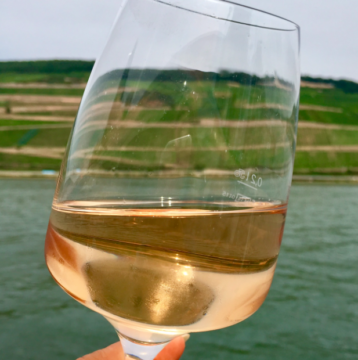
By German standards, the hilly wine region along the Rhine is relatively warm, sunny and dry. Warm days with cool nights. This gives the wine plenty of aroma and deliciously fruity acidity. Millions of years ago, Rheinhessen was an inland sea. That ancient seabed, with its little shells, now provides a limestone-rich environment around the vines’ roots. Resulting in even more freshness in the wine.
Riesling, liebling
Almost all the wine produced there is fresh and elegant. The absolute favourite is still Riesling, from which they make fantastic wine (including Sekt, German sparkling wine). And in the Dutch market, you are also seeing more and more good Silvaner and Scheurebe. Usually juicy and yet dry. By the way, don’t immediately skip the sweeter varieties (called lieblich in Germany). The fruity acidity keeps the wine from seeming sticky. A party with fruity desserts and spicy food.
Burgunders
Also try the so-called Burgunders. The often subtly oak-aged Spätburgunders (pinot noir), Frühburgunders (indeed, earlier-ripening), Weissburgunders (pinot blanc) and Grauburgunders (pinot gris/pinot grigio) from Rheinhessen are more than worth tasting. More and more are being planted there too. The ‘warmer’ climate and limestone-rich soil are perfect for these grape varieties. These wines are often somewhat fuller and softer than the average Riesling, but still wonderfully knusprig.
Wine festival
The fresh wine trend was kick-started by Sauvignon Blanc, Verdejo and Pinot Grigio. But the Germans have long since caught up. The wine is simply good, and it is also easy to get there. That makes it extra fun. In Rheinhessen, the Winzer, for example, organise their own wine festival. Without Lederhosen and bratwurst, but with hip DJs and Burgunders. A smooth-talking winemaker asked whether I was staying a little longer as he handed me a flyer. I read: ‘BurgBerg BurgUnder, BurgVibes: Bei lockeren beats und gutem Essen entspannt dem Sonnenuntergang entgegen’. I almost stayed.
Still prefer to taste in the Netherlands?
Weingut Bischel
Weingut Dreissigacker
Weingut Erbeldinger
Weingut K.F. Groebe
Weingut Hoffman
Weingut Pfannebecker


