


Making perfect scones
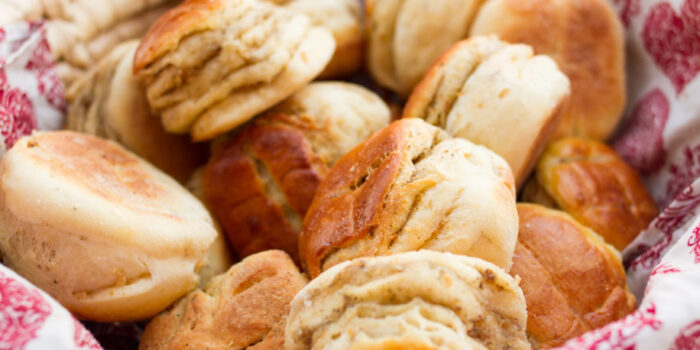
They’re a must at a high tea: scones. Baking them seems easy and is often quick, but ultimately it’s quite a challenge to get them perfect. Practise often and follow these tips, and your scones can’t go wrong.

First of all: your scones are at their very best on the day you serve them. So bake them fresh for the best result, and your house will smell wonderful too. The key to success? The dough.
As light as possible
Scones should be light, not tough. That’s why it’s important not to overwork the dough. Make sure your hands are cold, so the gluten in the dough doesn’t develop too much. A good mixing technique is called ‘counting money’. Rub the butter slowly into the flour between your thumb and fingers. Make the movement as if you were counting paper money. Continue until the dough has the texture of fine breadcrumbs.
You can also use two knives to cut the butter into the remaining ingredients, or put everything in a food processor. Continue until everything has just been mixed together. Then roll out the dough on a floured work surface. Roll out the dough only once and apply as little pressure as possible with your rolling pin. You can also do this with the palm of your hand. Make sure the dough is about 3 cm thick.
Cut, don’t twist
The next step is cutting out the scones. Are you using a cutter? Preferably use a serrated one. Press it quickly and firmly into the dough, but don’t twist. This way, you compress the edge of the dough as little as possible, allowing the scone to rise better later. Don’t have a cutter? Use a straight-sided glass or plastic cup.
Don’t collapse during baking
The scones shouldn’t collapse in the oven. To prevent this, it’s important that they support one another. Make sure they lean lightly against each other on the baking tray. It’s not a problem if they stick together: they’re easy to pull apart. Place the baking tray high up in the oven.
Also read:


