


Making your own coppa
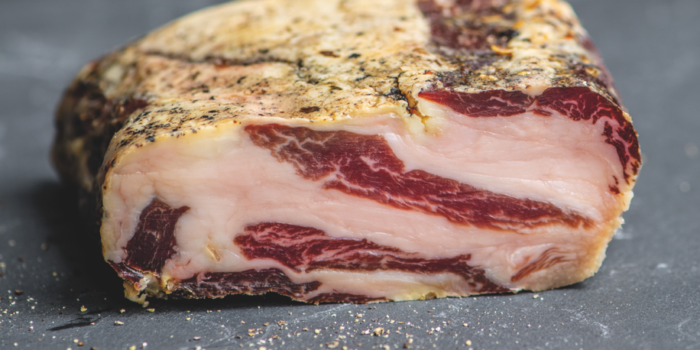
You can buy charcuterie, but making it yourself is much more fun. Overwhelming? Could be. But in Over Charcuterie, Meneer Wateetons guides you through the process step by step. By the time you’ve finished this book, you’ll be able to make anything, develop your own recipes, and from then on you’ll only need one glance at the French butcher’s display to recreate any product. But let’s start at the beginning. With this absolute classic: coppa.

Coppa is made from pork shoulder, the neck of the pig. It is the charcuterie cut that gives you the most bang for your buck: easy, practical in size, little work and always a good result. That’s because pork shoulder is naturally beautifully marbled, so the risk of drying out is not very high. An excellent beginner’s project, then..
Preparation
- Buy a good-quality boneless pork shoulder. The more marbled it is, the better the result will be. You can also start with half.
- Trim away any loose flaps.
- Weigh the pork shoulder and note down the weight.
- Weigh out salt and rub it into the pork shoulder. Add plenty of seasonings of your choice.
- Vacuum-seal and salt for 3 weeks in the refrigerator.
- Rinse briefly with cold water and pat dry. If desired, rub with some red or white wine and pat dry again. Weigh once more.
- Soak a beef bung casing in water for several hours, until it is soft and pliable.
- If desired, rub the coppa-in-the-making once more with the seasonings used earlier.
- Pull the casing over the pork shoulder and tie it closed, or use a net. Pierce holes in it so no air remains between the casing and the meat.
- Let it dry for 24 hours at room temperature or slightly warmer, then move it to a cool (10–15°C) and relatively humid (approximately 75% RH) space. Let it dry there until it has lost approximately 1/3 of its original meat weight.
Tips and variations
- Even in its raw state, pork shoulder gives you the most bang for your buck: grill it, fry it, cook it low and slow, make pulled pork, make sausage with it… pork shoulder can do it all.
- Some people wrap their coppa in a casing, others don’t. Both are possible. Do make sure to tie the coppa into a good shape if you don’t use a casing. You could also let the casing develop mold.
- Several tying techniques are possible.
- A rather brilliant crossover product is pancetta coppata, coppa wrapped in a thin layer of pork belly. Preferably make it with two people, and make things easier for yourself by using a netting for rolled roasts.
Charcuterie photography: Saskia Lelieveld
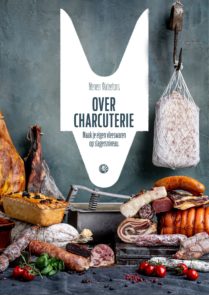
Title: Over Charcuterie
Author: Meneer Wateetons
Price: €31.99
Publisher: Carrera Culinair
Read also:


