



Pamper That Kitchen Knife
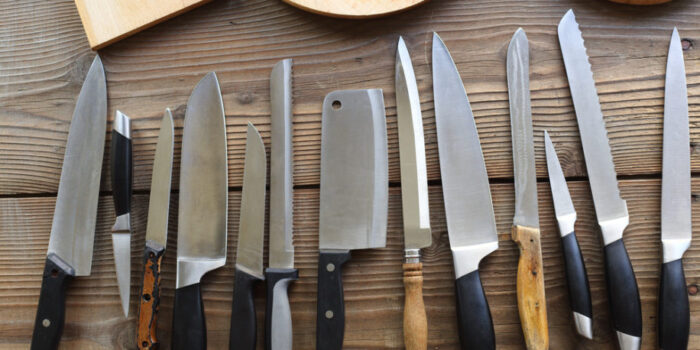
After years of chopping and pulling with blunt potato peelers, the time has finally come. You have the kitchen knife of your dreams. How do you make sure it stays razor-sharp?

Saved for years for a filleting knife? Proud of your professional chef’s knife? Absolutely delighted with your slicing knife? Rightly so. A kitchen knife is a valuable investment. With a little proper care, it will last you a lifetime.
Care and pampering
To begin with: don’t put it in the dishwasher. Your knife may not come out looking as shiny as you had hoped. The latest dishwashers wash with such force that they can damage your knife. In addition, aggressive dishwasher tablets can corrode the metal. Simply wash it by hand with a sponge and pamper that knife! Dry it thoroughly and occasionally rub it with a little camellia oil to prevent rust. Then store it in a knife guard to prevent damage to the blade.
Knife vs. saw
You bought a knife, not a saw. Cut your food in one smooth motion and don’t saw back and forth. It isn’t necessary. If you feel that it is, then your brand-new kitchen knife is not the right tool. Stay away from bones. Even so-called ‘boning knives’ are not intended for cutting bones. Frozen food is also a no-go. Hard pits are not recommended either. Use an axe, a saw, whatever you like, but keep that knife away from them.
No glass
Cutting boards have a major influence on the lifespan of your knife. By now, most people are aware of this, but in case you missed it: don’t use glass. Glass is harder than the knife, which means it will damage it. Your knife should be harder than the cutting board. Use one made of wood or plastic, whatever you prefer. And don’t give in to the temptation to quickly cut something on a plate.
Stay sharp
Despite all your care, your knife will eventually become blunt. This happens because the angle of your knife becomes distorted. Time to sharpen it. Furiously waving a honing steel around is not enough. With a honing steel, you can realign the knife: small imperfections disappear, allowing the knife to cut better. However, you do not create a new edge angle; for that, you need to use a diamond rod or sharpening stone, also known as a whetstone. Whetstones come in various grits: you sharpen with a coarse stone and polish with a fine one. You can also outsource this job to professional knife sharpeners.


