



Q&A with Hiljo Hillebrand of Broodbijbel
He works with bread every day, doesn’t consider himself too good for a supermarket loaf and has only limited success with bread machines. Hiljo Hillebrand is not yet very well known among the general public, but thanks to his new book Broodbijbel, that is changing rapidly.

His book has been in stores for barely two weeks, but many loaves have already been baked from it, Hiljo says. Compliments for the Master Baker are pouring in via social media and personal messages.
Why did you decide to write a book?
I was asked by the publisher, which was a great honour because I’m not very well known among consumers. In the baking world, everyone knows me. I compete in baking championships at world level and became world champion pizza baker in 2010. In 2014, I became a Master Baker. But unlike, for example, Robèrt van Beckhoven, a good friend of mine, I’ve never appeared on television.
How are you finding getting to know home bakers?
Very well. I’ve learned a lot from it. The first recipes were sent straight back to me. I used all kinds of professional jargon, which is complete gibberish to home bakers. I found it a challenge, which is why it took two years for the book to be completed.
What is your favourite bread country?
France. Or Germany after all. I like the sourness of German breads. But I find French techniques the most interesting. In terms of flavours, I’m very drawn to Italy; it really warms my heart. Nevertheless, I also appreciate the down-to-earth Dutch attitude. I’m old-fashioned. The bread I still find the most delicious is wholemeal bread.
Which bread should not be missing from our Sunday morning breakfast?
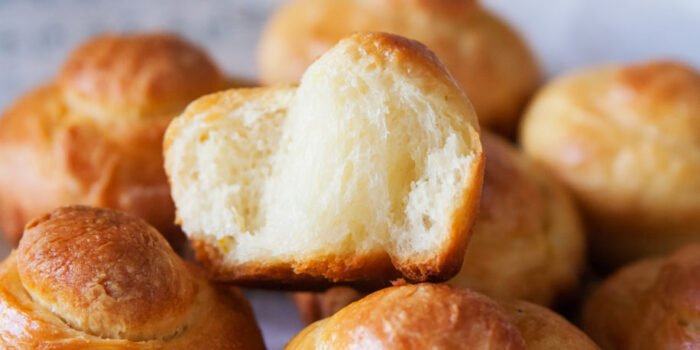
Brioche, filled rolls and a freshly baked croissant.
The most delicious bread you have ever baked?
I baked that when I had just started out. Friends still talk about that bread. The problem is, I have no idea how I made it. I simply used a handful of this and a little of that. I’ve baked similar breads since, but never again one as perfect as that one.
Most beautiful bread-baking technique?
Laminating risen dough. You make layers of butter and dough, as with croissants or sweet buns. It’s a very versatile technique that is also used in pastry-making. I would like to learn more about patisserie as well, and perhaps become a Master Pastry Chef one day.
Indispensable kitchen gadget?
The oven, of course. And your hands.
What is the biggest baking mistake home bakers make?
Not kneading enough. How long you need to knead depends on the dough and the type of flour. Spelt requires less intensive kneading than wheat. You should be able to stretch the dough into a thin membrane.
Could a bread machine help the home baker?
No, a day without dough in your hands is a day not lived. That’s why I don’t see the point of a bread machine either. You need to have the dough in your hands; then you can feel whether it’s right.


