



Recipe: Gnudi with sage butter (so easy to make!)
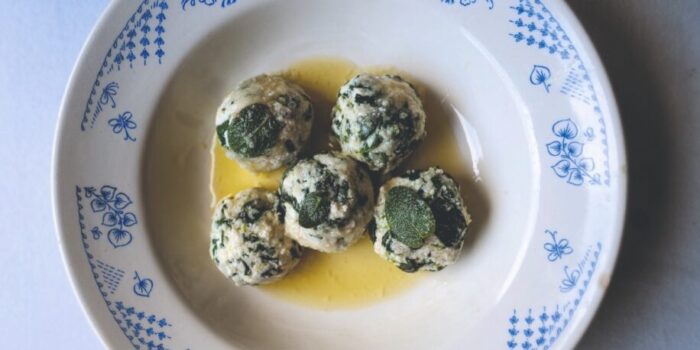
A charming name for a delicious little dish. Gnudi are actually a kind of naked ravioli: pillow-like balls of creamy ricotta filling without their pasta jackets. Instead, they retain their shape with a delicate coating of semola, which forms a soft crust. Gnudi originally come from Tuscany, but you can now find them in many Italian regions. They are especially delicious with good-quality sheep’s milk ricotta, something that Sardinia has in abundance.

The lovely thing about gnudi, apart from their unusual name and delicious flavour, is that they are very simple to make. No fussing over making and rolling out pasta dough, just a soft ricotta-based mixture, briefly stirred together in a bowl and then rolled by hand into balls and dipped in semolina. Some people add egg to bind the mixture, but Letitia Clark—who shares the recipe with us—usually keeps it simple and uses only ricotta. Letitia: ‘Sometimes I add some leafy greens and always nutmeg, some lemon zest (not traditional, but very delicious) and Parmesan.’
Snowballs
Letitia: ‘Gnudi are also incredibly versatile. In winter, I like to make white ones. They look a little like snowballs in a warm bath of sage butter. In spring, I add some iron-rich leafy greens to the mixture, such as borage, nettles or spinach; in summer, I add mashed fresh peas for pale, pistachio-green gnudi. I like to serve them with a simple sauce of melted butter and sage.
Remember that you need to make the balls a day before you want to serve them, because they need to firm up in the refrigerator overnight. This also makes the semolina jackets firmer, preventing unwanted explosions in boiling water.’
Ricotta
A note about ricotta: if you can find real, fresh sheep’s milk ricotta, it will probably be firm enough to use as is. Pasteurised ricotta from the supermarket is often much wetter; it is best to drain this for a few hours in a sieve lined with muslin or kitchen paper, until it is firmer.
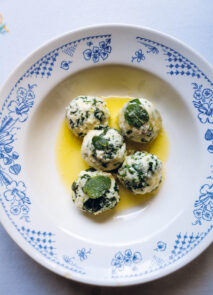
How to make gnudi with sage butter
- Cook the leafy greens (for a few seconds) in a large pan of salted water until just tender. Drain well and leave to cool. Squeeze out the excess moisture with your hands. Chop roughly (with a knife or in a blender) and set aside.
- Place the ricotta in a large bowl and add the Parmesan, lemon zest, nutmeg and salt, along with the chopped leafy greens. Mix everything with a fork or simply with your hands. Taste and adjust the seasoning if necessary.
- Put a generous layer (2.5 cm) of semola in a large roasting tin. With clean hands, take walnut-sized portions of the mixture and roll them into perfect balls. Place them in the semola and roll them back and forth until evenly coated. Arrange the balls evenly spaced in the roasting tin and make sure they are covered with a generous layer of semola, so that you can no longer see any white ricotta. Refrigerate overnight under their blanket of semola.
- The next day, turn the balls over and briefly roll them in your hands to remove the excess semola. The balls should be nicely firm and evenly coated.
- Bring a deep pan of generously salted water to the boil and carefully lower in the gnudi. After about 2 minutes, they will float to the surface. Carefully remove them with a slotted spoon and set aside.
- Meanwhile, make the sauce. Melt the butter, add the sage leaves and stir over low heat. Add the salt and a splash of gnudi cooking water and stir until smooth.
- Serve with sage butter and sprinkle with grated pecorino.

Title: Wild fig & fennel
Author: Letitia Clark
Price: €29.99
Publisher: Becht
In this beautiful cookbook by Letitia Clark, you can cook delicious Italian dishes all year round using the best products of every season. Use the first green asparagus of spring in a delicious pasta with chilli and Parmesan, or give classic Italian tiramisu a twist with summery strawberries. Pumpkin gnocchi with sage butter and ricotta is the perfect autumn dish, while in winter you can warm up with pasta puttanesca.
Also read:


