


Recipe: za’atar bread from Ottolenghi’s team
Yotam Ottolenghi is an extremely successful bestselling author, and two of his loyal cooking buddies have now written their own cookbook: Falastin. An absolute must for every Yotam fan, because this book is also packed with mouthwateringly delicious and colorful recipes from the rich cuisine of the Middle East. Like this immensely popular little bread with my all-time favorite spice blend: za’atar.

Falastin is a tribute to Palestine. Arabic has no letter ‘p’, which is why the title is spelled with an F. It is an ode to the rich food culture that gave us falafel, hummus and tabbouleh, among other things. And the most divine za’atar breads….
Za’atar
Apart from this wonderful recipe, I also want to share my love of za’atar with you. This is an irresistible spice blend that every cook puts their own spin on. Most za’atar blends contain at least dried thyme, sumac, sesame and a little salt. Sprinkle the spice blend into delicious olive oil and dip pieces of bread into it—that’s when za’atar tastes best. Or make it the way I do when I’m feeling lazy and don’t have time to bake these breads: make a generous mixture of olive oil and za’atar (and if you like sesame seeds, add some extra sesame seeds too), spread it generously over flatbread and bake it in the oven or in a frying pan.
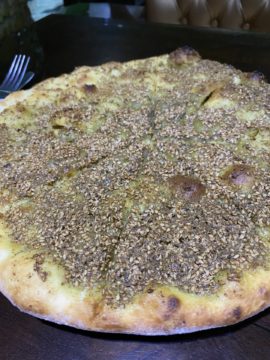
Za’atar is also delicious with more than just bread, by the way: stir yogurt with tahini, sprinkle it over grilled carrots and then scatter some za’atar on top. Also delicious with eggs.
Za’atar bread
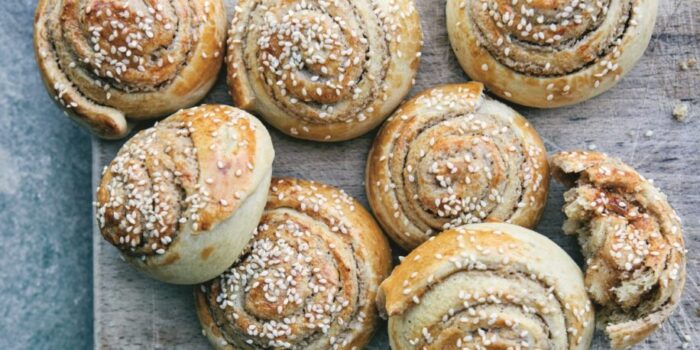
Za’atar bread is also called ‘fatayer fallahi’, meaning ‘villager’s pie’. It was originally made in spring, at the beginning of the season when people went out to forage for wild za’atar. This recipe uses fresh oregano and dried za’atar, making it possible to bake this bread all year round. You can shape the bread in all kinds of ways: as a flatbread, a regular loaf or individual rolls like these. However you shape it, the inside should always be super soft—almost gooey—with a really crisp crust. Serve them either warm or at room temperature on the day you make them, with some labneh (or feta) and olives.
Tip: make ahead
You can make the dough up to 2 days in advance and keep it in the refrigerator, so you can roll it out and bake it straight away. Freshly baked rolls freeze very well, and you can toast them straight from the freezer or reheat them in the oven. The recipe below makes 12 rolls.
How to make za’atar bread from Ottolenghi’s team
First make the dough. Put the yeast, sugar and water in a small bowl and stir everything together. Set the yeast mixture aside for 5 minutes, until it starts to foam. Put the flour, milk powder, turmeric powder and sea salt in the bowl of a stand mixer fitted with the dough hook. Mix for 1 minute until just combined, then add the yeast mixture, followed by the sunflower and olive oils. Run the machine on low speed for 2 minutes until everything is combined, then switch to medium speed. Continue mixing for 3 minutes. Add the sesame seeds, nigella seeds and oregano leaves and mix for another 4 minutes, until the dough is smooth and elastic and the oregano leaves have been incorporated. It will feel very soft and almost sticky, but that’s how it should be. Tip the dough onto a clean work surface and shape it into a ball. Grease the mixing bowl with 1 tablespoon of oil and place the dough ball inside. Turn it over a few times so it is coated with oil all over, then cover the bowl with a clean tea towel. Leave it in a warm place for 1 hour, until the dough has doubled in volume.
Roll the dough into a sausage about 30 cm long, and cut it into 12 equal-sized pieces, each about 50 grams. Shape each piece into a ball, place the balls on a large tray and leave them covered with a clean tea towel for 20 minutes to rest. Preheat the oven to 200 °C.
On a clean work surface lightly dusted with flour, press each ball out with your fingers into a circle about 10 cm in diameter and 2–3 mm thick. Spoon
2 heaped teaspoons of crumbled feta into the center of each circle. Pull the edge up all around and pinch it together so that it forms a dough ball again. Place the rolls on a baking tray with the pinched side underneath and not too close together. Brush the balls all over with yogurt, in the same way you would brush them with beaten egg, and sprinkle them with extra sesame seeds, nigella seeds and za’atar. Leave them to rest for 5 minutes, then bake them in the oven for about 20 minutes, or until cooked through and golden brown underneath. Remove the rolls from the oven and serve them immediately while still warm, or a little later at room temperature.
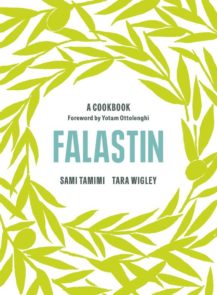
Title: Falastin
Authors: Sami Tamimi & Tara Wigley
With a foreword by Yotam Ottolenghi
Publisher: Fontaine Uitgevers
Price: € 29.95


