



Sushi for dummies
At that all-you-can-eat restaurant, you regularly let a piece of sushi plop into the soy sauce and eat an overkill of wasabi. You leave the ginger untouched, and you don’t know the difference between uramaki and futomaki. You just stuff whatever into your mouth. What a waste! With this quick guide, you’ll eat sushi like a real pro from now on.

1. Know the differences
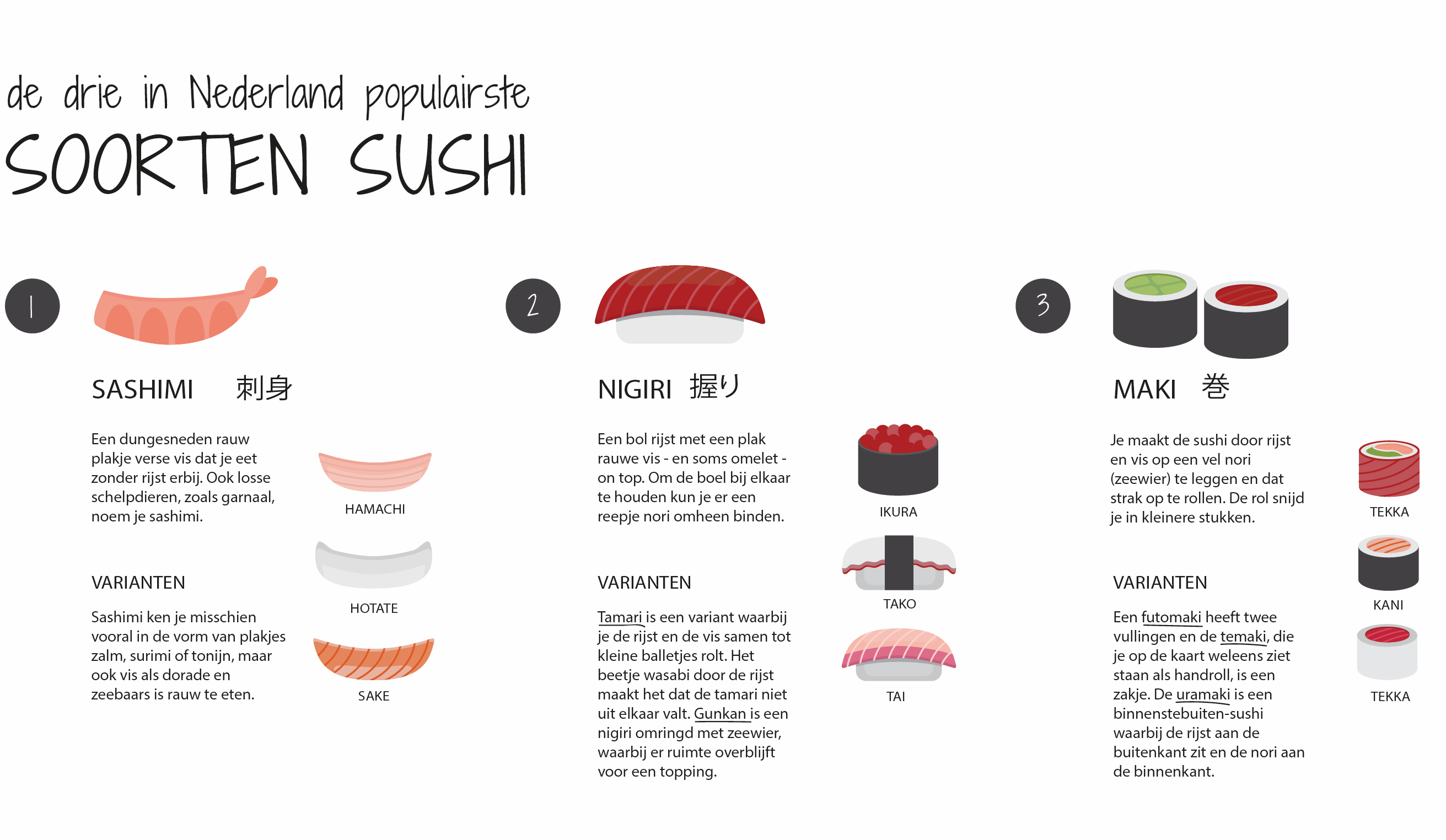
Sushi comes in all kinds of shapes and sizes. From maki to nigiri to sashimi: do you know the differences? We’ve listed the three most popular varieties for you. Did you know that Japanese people also eat oshi, a kind of pressed sushi?
Tip: open the image in a new tab for a larger view.
2. Use your chopsticks the right way
The idea is to put sushi into your mouth in one go. It’s perfectly acceptable to bring it to your mouth with your fingers—except when eating sashimi—but it’s more proper to use chopsticks for everything. Were you given wooden chopsticks with your sushi? Eat with the end that wasn’t attached to the other one. Sharing a dish? Pick up the sushi with the other end of the chopsticks. Much more hygienic.
3. Eat in the right order
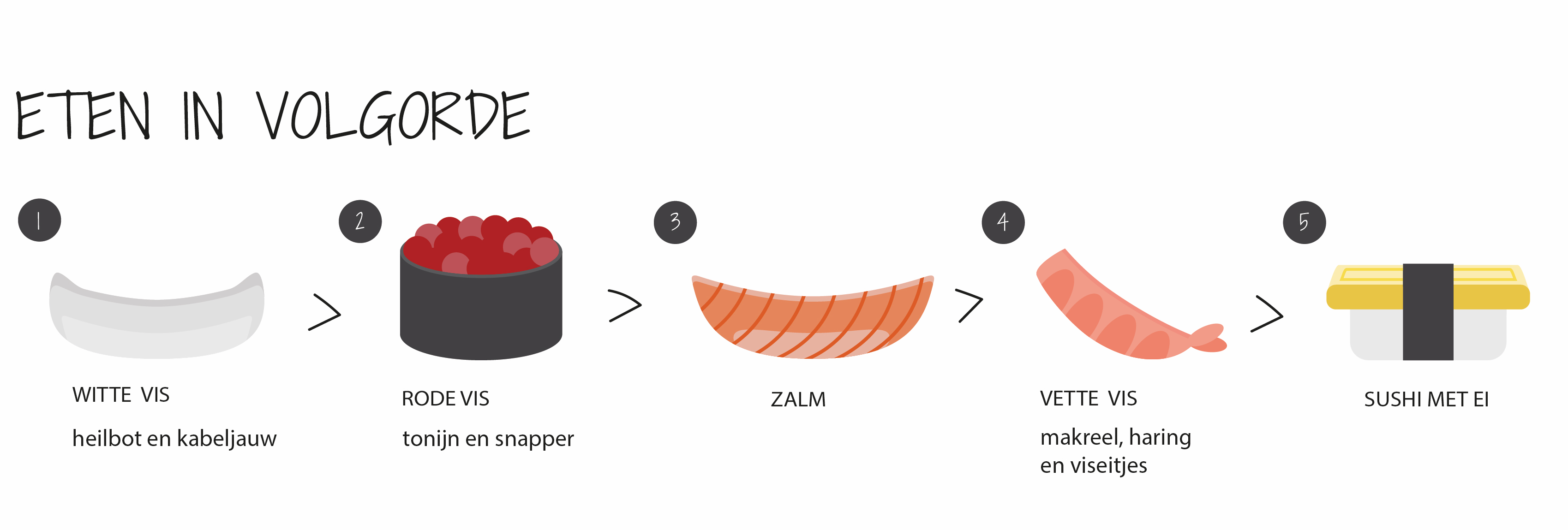
To prevent the stronger fish flavors from becoming too overpowering, always eat sushi in the same order. From light to heavy. Eat egg last, and if you order simple maki, you’re showing that you’re almost finished.
4. Follow soy sauce etiquette
Don’t drown your sushi in soy sauce. Always dip only the fish into the sauce, not the rice. Rice absorbs it quickly, causing it to fall apart. Besides, the flavor soon becomes too overpowering. What a waste. One more tip: don’t fill your dipping dish too full. Japanese people consider it impolite if you leave soy sauce behind.
5. Ginger and wasabi?
Gari (pickled ginger) isn’t used as a garnish for sushi; you eat it to neutralize the flavor of the previous piece of sushi. And wasabi? No, you absolutely don’t stir it into the soy sauce; it’s meant to be placed in a small dab on each piece of sushi. In really good sushi restaurants, the sushi chef has often already done this for you.


