


Tea with your dinner
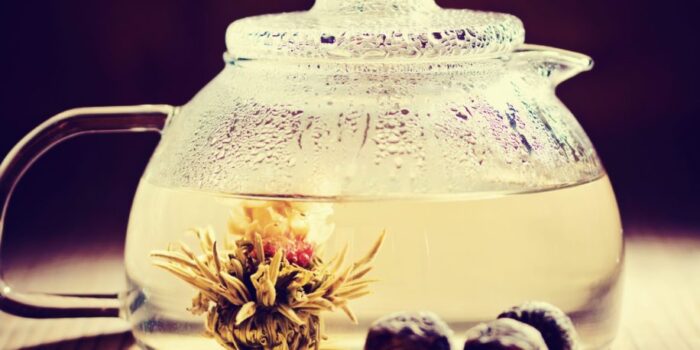
Start your meal with tea, have one or two more cups and take your final sip with dessert.

Tea with your dinner? In the western part of the world, that is rather unusual, apart from high tea. We tend to choose a glass of wine, water or a soft drink instead. Chinese people, on the other hand, have been drinking it with their food for thousands of years. And their cuisine is as diverse as the number of types of tea, with a suitable tea for every dish.
Warmth is countered with cold, and vice versa
This hot drink is not enjoyed so much without reason. According to 5,000-year-old Chinese nutritional theory, drinking tea with a meal has a positive effect on your body. Depending on the herbs added to the tea, it neutralises ‘hot’ or ‘cold’ ingredients.
Chinese nutritional theory
Chinese nutritional theory sees tea as both food and medicine. You can use it to enhance the positive effects of a dish and reduce the negative ones. The key is to create balance. Warmth is countered with cold, and vice versa. According to the Chinese, this is a form of preventive care to avoid becoming ill.
Chinese nutritional theory sees tea as both food and medicine
If you are eating côte de boeuf, with a generous layer of fat (also delicious with a glass of Barolo), choose white tea with lotus leaf, citrus and hawthorn. This combination helps distribute and dissolve fat. Ice cream for dessert? Then drink something warming, such as red tea with ginger powder and jujube. It will not only make you feel warmer, but also strengthen your stomach.
Tea with your fine-dining meal
It takes some getting used to, tea instead of wine with your meal, but it is a special experience. At Michelin-starred restaurant HanTing in The Hague (*) you can visit from June onwards for a special Tea Menu. Chef Xiao Han Ting has created a tea pairing with tea sommelier Kiona Malinka that perfectly complements the dishes. Kiona was responsible for the flavours of the tea, while Han Ji handled the added herbs, which have a neutralising effect.
HanTing Cuisine, Prinsestraat 33 The Hague.
Tea at home
Creating a good combination of herbs and tea is quite complex. When you get started at home, it is therefore easier to leave out the herbs and stick to tea. You can look for similarities between the flavours of the tea and your dish, or choose contrasting flavours. It is not only the taste that matters, but also the mouthfeel of the tea. With rich dishes and robust flavours, it is best to serve strong tea. Light, fresh dishes pair well with white tea.
Green tea: Sencha, or other Japanese teas, pair well with fresh dishes. Think seafood, fish or rice. Salty dishes also become milder when you drink this tea with them.
Oolong tea: This tea, which falls between green and black, is delicious with shellfish and crustaceans.
Black tea:
Black tea has plenty of body, making it suitable to drink with meat dishes.
Jasmine tea: Do you cook dishes with subtle flavours? Then choose this light, green, floral tea.
White tea: White tea has a neutralising effect and is ideal for serving as a cold brew shot between courses. How do you make cold brew tea? Leave tea in cold water in the refrigerator for 12 to 24 hours.
Tip from tea sommelier Kiona Malinka: do not serve the tea too hot, otherwise you will not taste any of the flavours (40 to 60 degrees is perfect).
With thanks to tea sommelier Kiona Malinka
Text: Nora van den Heuvel
Image: Shutterstock


