


The Effect of Herbs on the Taste of Wine
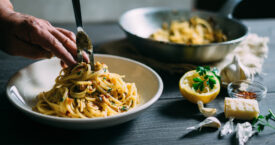
In the maze of wine and food pairings, every combination tip is one of many. It is therefore a sign of goodwill that supermarkets and wine shops nowadays provide concise information with their wine. But don’t be mistaken. With a general footnote such as ‘game wine’, you are still far from guaranteed success.

That success is within everyone’s reach, provided you think beyond your piece of meat. To pair wine and food successfully, you need to determine the dominant factor in your dish. And that is not necessarily the meat, fish, pasta, or chicken. Cooking technique, sauce, herbs, and spices play at least as important a role in the final flavor profile. Sometimes they even take control. Ultimately, the most dominant element leads the troops. And a change in leadership more often than not results in a reorganization.
Simple test
How dynamic a flavor can be becomes clear through a simple test: taste your favorite white wine after both a slice of lemon and a piece of banana. After the lemon, the wine tastes significantly sweeter than after the other fruit. And undoubtedly much sweeter than how you actually know it. This is the essence of changing flavor and taste perception. And that very experience needs to be reflected in your wine.
Taste your favorite white wine after both a slice of lemon and a piece of banana.
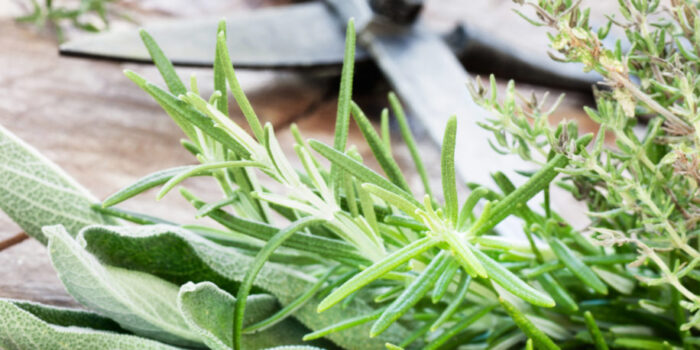
It is obvious that a different preparation method affects flavor—just think of the difference between fried and poached fish. But that adding a little curry, coriander, or even dill can cause your carefully chosen wine-and-food pairing to fail may be less self-evident. And yet it is true. Spices and herbs with such pronounced flavors—also think of nutmeg, clove, rosemary, thyme, oregano, and bay leaf—quickly dominate the style of the meal and should therefore be of decisive importance when choosing a wine. Personally, I enjoy such a refined challenge, but if that addition was intended merely as a flavor accent or decoration, you are seriously missing the mark.
Finesse in wine and food
Do not underestimate the obvious pinch of pepper and salt either. Salt—just like the acidic lemon—reduces the acidity present in the wine, while simultaneously enhancing its sweet notes. And by making your dish spicier, your accompanying glass may suddenly come across as more alcoholic than before, while any tannins will seem harsher. Conversely, you can take advantage of this; while cooking, you can soften overly acidic wine with a little extra salt, or give a somewhat flat red wine more body with a touch of pepper. This is how you add finesse to both wine and food.
The flavor of a sprig of thyme gently simmering in a beef stew is more delicate than when that same sprig is harshly roasted alongside an entrecôte.
Of course, it does matter how you incorporate such a herby addition. The flavor of a sprig of thyme gently simmering in a beef stew is more delicate than when that same sprig is harshly roasted alongside an entrecôte. But the fact remains that these additions contribute, to a greater or lesser extent, to the aromatic richness of the meal. And that is something you should at least pause to consider in combination with the wine.
A better awareness of flavor leads to greater enjoyment at the table. If you love cooking, you logically also love beautiful flavors, and the right wine belongs with the right dish. Because when creating every meal, you deserve that proverbial cherry on top, too, don’t you?
Text: Romy Kooij – Miss WineLane
Image: Shutterstock


