



The perfect steak is made sous vide
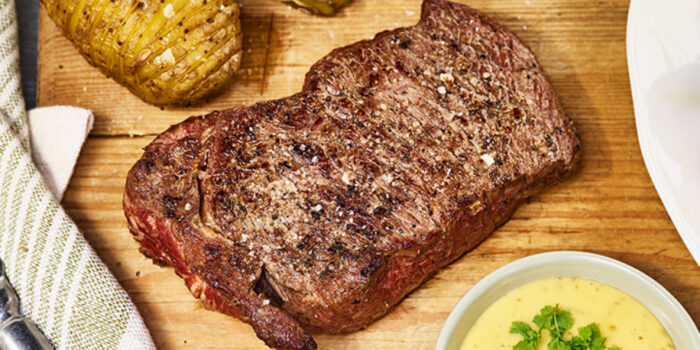
Sous-vide cooking is the foolproof method for a juicy steak. No more steaks that are slightly overdone or too rare. Editor-in-chief and carnivore Marcus Polman makes his favorite steak dish: ribeye with béarnaise.

Sous vide is cooking vacuum-packed meat (or fish or vegetables) with steam (or hot water) at a constant low temperature. With an oven equipped with a sous-vide function, such as this oven from AEG, you can set the temperature precisely to the degree. Making the perfect steak has never been so easy.
The core temperature of your meat will be exactly the same as the set temperature. Then grill or fry it briefly for a beautiful browning and crispy crust, and there you have your perfect steak. Your meat can safely continue cooking sous vide for several hours after the minimum time has elapsed (handy if you want to prepare everything in advance). Delicious with roasted vegetables and Hasselback potatoes from the oven.
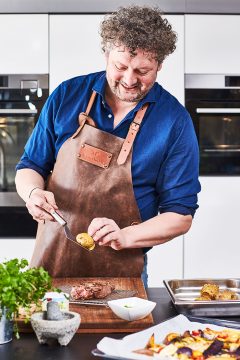
Preparation
First prepare the steak in the oven using the sous-vide function, then use the oven to roast the vegetables and potatoes. Once the vegetables are ready, finish the steak in a frying pan, grill pan or on the barbecue.
Meat
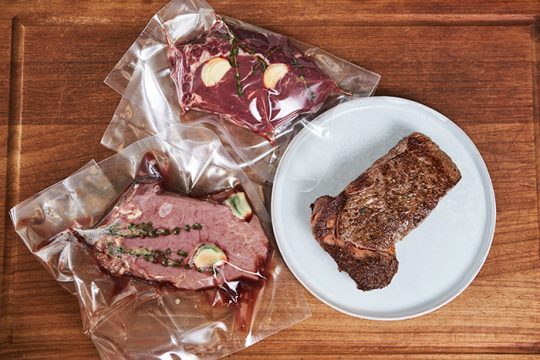
Ask your butcher for beautiful, well-marbled (dry-aged) ribeye steaks, 3 centimetres thick and 225 grams each.
Place each ribeye in a plastic sous-vide bag with some thyme and garlic. Seal the bags using the oven’s vacuum sealer. Set the oven to sous-vide mode. Set the desired temperature. 50 degrees Celsius for rare or 55 degrees Celsius for medium-rare, or higher if you prefer medium-well. Place the bags in the oven and make the sauce in the meantime.
After 1 to 1.5 hours, the steaks will have reached the correct core temperature (depending on their thickness).
Béarnaise
Pick the tarragon leaves from the stems and peel the shallot; chop both finely and separately. Mix the vinegar with 2 tablespoons of water, the tarragon stems, peppercorns and chopped shallot in a saucepan. Simmer over low heat for 5–10 minutes, until reduced by half. Strain the liquid into another saucepan.
Wipe the pan clean and melt the butter in it. Over low heat, without allowing it to brown. Whisk the egg yolks into the reduced vinegar. Place the pan over low heat on the smallest gas burner, using a heat diffuser if necessary. Whisk vigorously for at least 5 minutes, until the mixture starts to thicken.
While whisking, add the warm butter in a thin stream. The sauce should be thick and run from the whisk like a ribbon. Season the sauce with the lemon juice, some salt and the cayenne pepper. Stir in the tarragon and chervil.
Keep the sauce warm, for example au bain-marie (the saucepan in a larger pan of boiling water) or in a clean, odour-free thermos flask.
You can also use the quicker blender method: whisk the egg yolks in the blender for 1 minute. With the machine running, slowly add the reduced liquid. Pour in the warm butter in a thin stream. Mix in the herbs and season to taste.
Hasselback potatoes
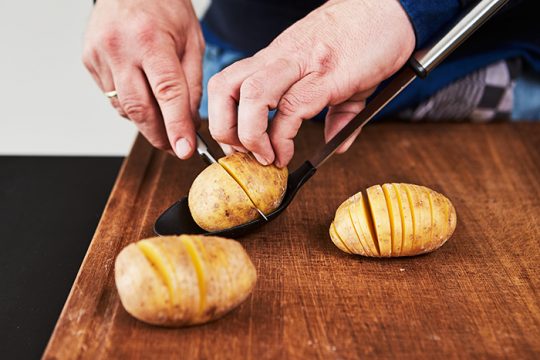
Preheat the oven to 200 degrees. Cut into the potatoes with a sharp knife, making sure not to cut all the way through. The potato slices should remain attached at the bottom.
Rinse the scored potatoes under cold running water so that the slices no longer stick together, then pat dry. Sprinkle with pepper and salt. Place the potatoes on a baking tray lined with baking paper and drizzle with olive oil.
Then place a knob of butter on each potato. You can also use melted butter for this. Slide the potatoes into the centre of the oven for about 45 minutes and bake until golden brown and crispy. The potato slices will fan out.
Sprinkle with some parsley just before serving, and optionally some coarse sea salt.
Roasted vegetables
Preheat the oven to 200 degrees. Peel the parsnip and cut it into two or three pieces. Peel the onion and cut it into six wedges. Place the parsnip and onion in a bowl and mix with 1¼ decilitres of olive oil, thyme, rosemary, garlic, salt and pepper. Place in a roasting tin and roast for approximately 20 minutes.
Wash the sweet potato, cut it in half and cut each half into approximately 6 wedges. Toss the potato with the parsnip and roast for approximately 50 minutes.
Once all the vegetables have browned, stir in the tomatoes for the final 10 minutes.
Make the vinaigrette. Whisk together the lemon juice, capers, maple syrup, mustard, 2 tablespoons of oil and salt. Pour the dressing over the vegetables as soon as they come out of the oven.
Frying
Bring the meat to room temperature in good time. Sprinkle the ribeye steaks with coarsely ground pepper and salt. Heat a frying pan over high heat. Lower the heat slightly once the pan is hot. A good ribeye contains enough fat and can easily be fried without butter. Otherwise, melt a knob of butter, wait until the foam subsides and the butter starts to brown.
Fry the steaks over medium-high heat for 3 minutes per side for rare (4 minutes for medium-rare or 5 minutes for medium). Do not move the steaks while frying. Reduce the heat if the butter threatens to burn.
Serving
Let the steaks rest for 5 minutes, loosely wrapped in aluminium foil. Place the ribeye steaks on warm plates and spoon the lukewarm sauce over them. Serve with the potatoes and roasted vegetables.
Read also:
- Go on a journey around the world with Anthony Bourdain in your backpack
- Hold my drink, a documentary about Anthony Bourdain is coming
- Anthony Bourdain’s iceberg lettuce with Stilton and pancetta


