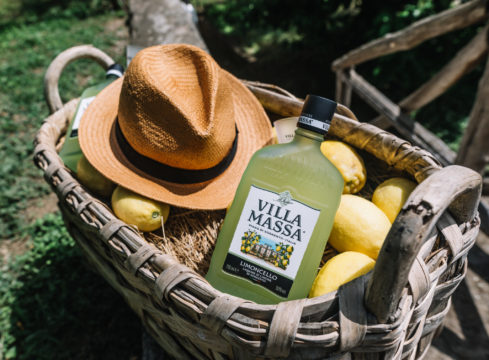
The real limoncello comes from Sorrento
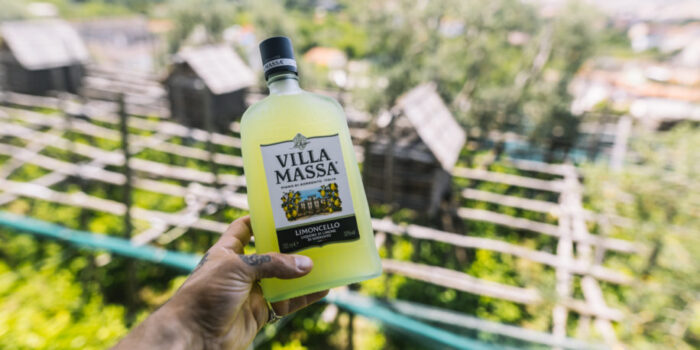
Ask an Italian where the best lemons come from and he’ll say – naturally – Italy. Ask a Sicilian and he’ll say Sicily. Ask someone from Campania, the region around Naples, and he’ll say Sorrento.

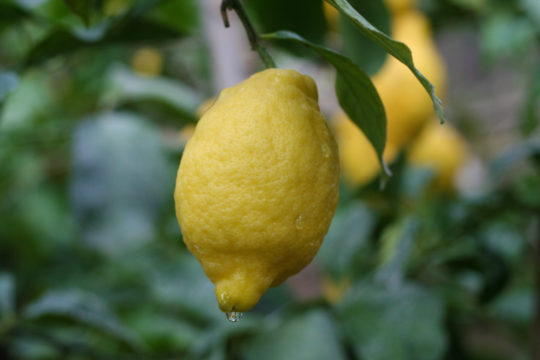
The limone di Sorrento are world-famous. These fist-sized, knobbly lemons bear little resemblance to the shiny, waxed specimens from our supermarkets. The lemons from Sorrento, a coastal town 50 kilometres south of Naples, have a protected designation of origin, one of those EU PGI certificates that guarantees a product’s origin and quality. Just like the lemons that grow a few kilometres further on, on the other side of the mountain ridge, along the stunning Amalfi Coast, which also have this coveted status. The locals are enormously proud of them, and rightly so. Sorrento is Italy’s lemon capital.
Want to make: blood orange and burrata salad
Quality
Anyone walking around the Sorrento area cannot escape the lemon. Among the villages built against the steep, rugged rock faces, you see the characteristic terraced lemon groves appearing everywhere. The lemons from this region are the basis for the limoncello produced here. The basic recipe for limocello is simple. Only four ingredients are needed: alcohol, lemon, water and sugar. Good limoncello needs no flavourings, colourings or additives. So the lemons used must be of top quality.
Since 1890
In the past, everyone in the region made their own limoncello according to their own recipe, just like grappa, for example. The family behind Villa Massa was the first Italian producer to also make the lemon liqueur for export. In the reception area of the small factory in Sorrento, black-and-white family photos recall its more than one-hundred-year history. “Our limoncello has been made according to the family recipe since 1890,” says Grazia, who is responsible for the Le Grottelle lemon grove in Sorrento, where lemons for Villa Massa limoncello are harvested. “Our secret? We have made our limocello all this time just as our ancestors did.”
Vesuvius
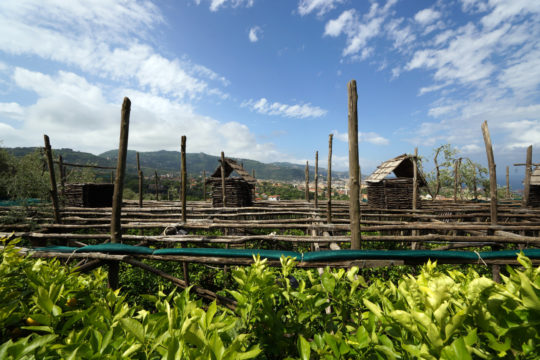
The reason why Italy’s best lemons grow here has to do with the volcanic soil (the still-active Vesuvius lies twenty kilometres away) and the ideal microclimate near the sea. In addition, an ingenious agricultural technique based on pergolas is used. In winter, the lemon grove is covered with pagliarella, characteristic straw mats that act like a roof to protect the trees from the cold and rain.
In summer, the lemon plantation offers plenty of shelter from wind and bright sunlight. “The shelter slows down the ripening process, which benefits the quality of the lemon,” Grazia explains. Yellow and green lemons hang all over the trees. Blossoms, ripe fruit and unripe fruit hang on the same tree at the same time. As many as four harvests can take place throughout the year. To this day, the Sorrento lemons are picked by hand.
Oil
Sorrento lemons have a characteristically thick skin. If you scratch open the outside of the peel with a fingernail, an explosion of fragrance is released. It is the essential oils in the peel that give limocello its unique flavour, colour and syrupy texture. The trick to making limocello is to peel the lemon thinly. The white, spongy layer just beneath the peel (albedo) tastes bitter and is not used. Nor are the flesh or juice, which also do not belong in limoncello. The lemon peels (flavedo) are soaked in alcohol (95 percent alcohol) for a week so they can release their flavour. The lemon-infused alcohol is then mixed with sugar syrup to make limoncello. Good-quality limocello has the right balance between sweet and sour and is not clear in colour but slightly cloudy and syrupy.
Did you know these vegetables grow like this?
How to drink it?
And how do you drink it? Italians swear by limoncello as an invigorating digestif after lunch or dinner. Served ice-cold, at a minimum of -7ºC, in a chilled shot glass that has spent some time in the freezer. Or add a few drops of limoncello to your espresso instead of grappa or sambuca in your coffee.
You also increasingly see the lemon liqueur appearing as an aperitif. Such as a Villa Massa Tonica, a mix of limoncello (1 part) and tonic (3 parts), with a basil leaf and ice cubes. Or the limoncello spritz cocktail with limoncello (1 part) and prosecco (2 parts), served in a champagne flute. Also delicious: a lemon cheesecake cocktail, with Liquor 43 and cream.
Photography: Nigel van der Horst/ Chef met Lef.