



The Sense and Nonsense of Decanting & Aerating
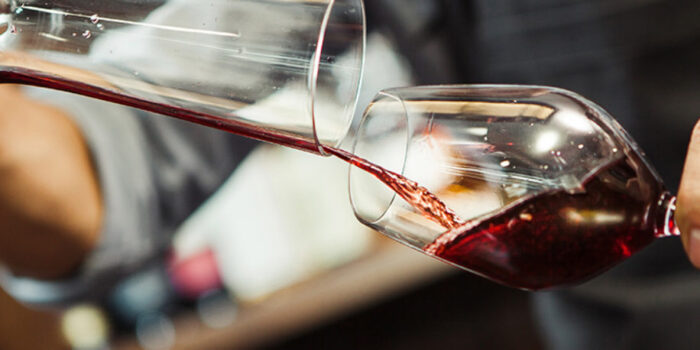
Pouring wine into a decanter is called decanting. So far so good. But why do we actually do it? Is it the same as aerating? And which decanter should you use? Miss WineLane answers all the pressing questions about the glass wine decanter.

Decanting and aerating are two different things. Even though the act of pouring may seem identical – and admittedly, in broad terms it is – the intended effect is completely different. When decanting, you are trying to remove something from the wine, whereas when aerating, you are adding something to it. What’s more, you decant with a long, slender decanter, while aerating calls for a round, wide one.
Light Aeration
Any (too) young wine with harsh tannins and few aromas will benefit from aeration. Especially true quality wines – red and white alike – can still be somewhat inaccessible in their youth. Professionals call such a wine closed. By pouring the wine decisively, well before serving, into a decanter with a long neck and a flat, broad belly, the wine comes into exuberant contact with oxygen. This ‘opens’ the wine. All the aromas are released more easily and the wine becomes friendlier and softer. Essentially, you are letting it age a little faster.
Decanting Sediment
You decant an older wine that has sediment in the bottle. This sediment forms as wine ages. It is a completely harmless sludge without any taste that floats through the wine. It is the result of the slow clumping together of particles that were already present. So it is not a fault. Still, you would rather not have it in your glass: it does not look very appetizing and feels strange and gritty in your mouth.
To separate the sediment from the wine, stand the bottle upright well in advance. This allows all the sediment to sink to the bottom. Shortly before drinking, pour the wine very gently into a narrow, tall decanter. This gives the delicate wine as little contact with oxygen as possible. Hold a small light or candle beneath the neck. That way, you can see the sediment clearly and know when to stop pouring.
That one special wine from your birth year can lose all its delicate aromas from a sudden boost of oxygen
Should You Do It or Not?
Most wines today are made to be drunk immediately. There is little point or need to aerate or decant them. Incidentally, thanks to more modern winemaking techniques, you also see less and less sediment. Only with true age-worthy wines are aerating and decanting still important.
Sometimes it can even be detrimental to the wine. A delicious little glugger can suddenly die from misplaced aeration. And that one special wine from your birth year can lose all its delicate aromas from a sudden boost of oxygen. It may even turn into vinegar right before your eyes. Personally, I therefore prefer to pour an old wine with sediment directly from the bottle. Simply stand it upright in time and pour patiently and carefully. That also produces a ‘clean’ wine, but with the subtle aromas still intact.
Other Aerators
Don’t have a decanter at hand, but still want to give the wine some extra air? Pouring it a little more vigorously or swirling it vigorously also does a lot. Or use a wine aerator (iSommelier, Vinturi Wine Aerator, VacuVin Wine Aerator), which sometimes even lets you aerate by the glass. Ideal if you are only drinking one glass. The rest can continue to mature in its own bottle for a while.


