


These groceries are getting increasingly expensive; the end of price increases is not yet in sight

It has been clear for some time: doing the grocery shopping is increasingly painful for your wallet. We previously wrote that food products were already more than four percent more expensive overall in January than a year earlier. There are all kinds of tips for saving money when doing the grocery shopping, while at the same time it also looks as though the price increases will continue for quite some time. So there’s no good news there—and are you curious to know which specific products have risen the most in price?

Research has been conducted into the reasons behind the higher prices, and there is little reason to be optimistic about the near future in that regard. Researchers from ABN AMRO, as reported by Algemeen Dagblad, call a further increase in food prices inevitable, in a year that will be uncertain for all businesses where food and drink are an important factor. So this affects you as a consumer in shops, at markets and in the hospitality industry. These are the products where it has been felt most strongly so far:
Bread
Nadia Menkveld is an economist and the compiler of the ABN Amro study. She explains the price increases based on various factors. In the case of bread, for example, the four-percent increase is partly due to grains becoming more expensive. The fact that Russia and Ukraine are now at war will also prove significant here; both countries are grain producers.
Relatively large amounts of energy are also needed to make flour and bake bread, and energy prices have risen as well. In addition, higher packaging and labor costs play a role, and according to Menkveld, bakers have not even fully passed on their cost increases—of as much as 20 to 30 percent—in their prices yet.
Margarine
It wasn’t exactly delicious to begin with, but it is now also 10.2 percent more expensive than a year ago. According to Menkveld, this is because the average global market price for vegetable oils such as palm oil, soybean oil, rapeseed oil and sunflower oil is now at its highest level ever. In February alone, the price on that market increased by 33 percent.
Fruit and vegetables
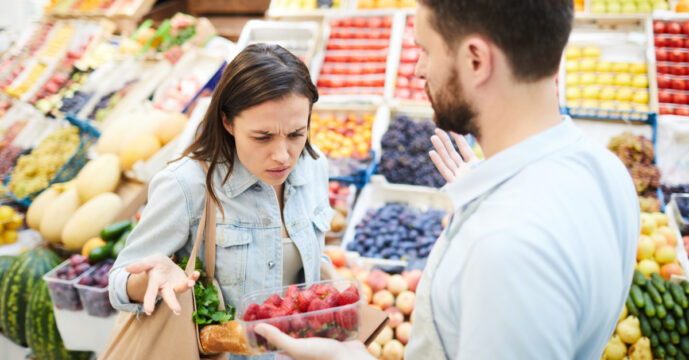
Besides the political bickering over what exactly falls under the categories of vegetables and fruit and what does not, these foods have also become 4.8 percent (fruit) and 6.3 percent (vegetables) more expensive. They’re making it bloody difficult for you to do your best to live healthily, aren’t they?
According to Menkveld, the increased import prices for fruit and vegetables play a role, and we source a lot of fruit and vegetables from abroad. Our tip: see whether you can buy some of your fruit and vegetables through a local initiative. Because what are we among other things feeling the financial impact of when it comes to imports?
“Many products, such as avocados, are transported in containers, and these have become significantly more expensive due to shortages. For Dutch vegetables such as tomatoes, supply is lower because greenhouses are partly empty due to high gas prices. Arable farmers are also dealing with higher costs for things such as fertilizer and crop-protection products, meaning that they too have to raise the prices of their products,” says Menkveld.
A difficult outlook
On top of all this, it is also sad that it is becoming increasingly difficult for people to make sustainable choices when doing their grocery shopping. Between 40 and 55 percent of customers now attach more importance to affordable prices than to origin or production methods. Innovation and sustainability are being pushed aside when production costs remain so high, and unfortunately that is expected to be the case in the coming years.
Also read:
- Grocery-shopping tips from professional chefs
- Enough to drive you crazy: even more annoying packaging
- Plastic surgeon warns: avocados are dangerous
Source: AD


