



This White Stuff Will Give Your Dishes a Seriously Fresh Kick

By now, most people know that baking soda (baking soda, sodium bicarbonate, bicarbonate of soda – pick your favorite) can both make your cake rise and get your baking sheet sparkling clean. But there’s another white wonder powder that’s at least as versatile: citric acid powder.

Yes, it sounds like something straight out of a chemistry lab, but believe me: this stuff gives your dishes a fresh acidic kick without having to squeeze a lemon. Handy when, for example, you’ve just squeezed your last lemon into your whiskey sour.
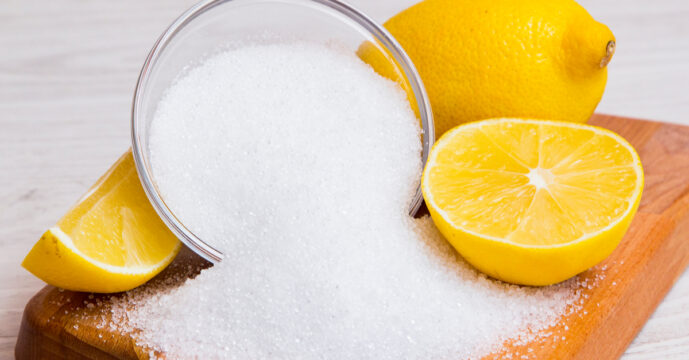
What exactly is citric acid powder?
Very simply: it’s the organic acid that naturally occurs in citrus fruits, but in concentrated powdered form. It acts as a natural preservative and antioxidant, but most of all: it gives dishes that lovely, fresh acidity chefs adore.
In short: a lemon, but without the hassle of seeds and sticky fingers.
Why should you keep it at home?
Because you can genuinely use it for everything. It’s ideal in dishes where you want to add acidity without extra liquid. Think of a dry rub for meat, a seasoning mix for vegetables or a finishing touch in a dressing.
An Australian chef once taught me that citric acid powder is indispensable in the kitchen. Makes sense, because chefs love working with acidity to bring balance to dishes. Salt, fat, acid, heat; Samin Nosrat didn’t write a whole cooking bible about it for nothing. Acid lifts flavors, makes fat feel less heavy and gives dishes tension. Citric acid powder is the secret shortcut: freshness without the fuss.
Where can you buy citric acid powder?
The aforementioned Australian chef puts it at the very top of his shopping list. He also suggested not buying it from a wholesaler, but looking for it at a small local Turkish or Moroccan shop, or an Asian grocery store. Because it lasts a long time, and it would be a shame to end up with a giant package at home. And indeed; the first Turkish shop around the corner already had it in a small plastic container with a green lid.
Note: it’s often listed under the English name citric acid. And make sure it’s food-grade, with no extra chemical additives, and not intended for cleaning. (If you see it between the Glorix and Vanish Oxygel, that’s a clue.)
How do you use citric acid powder in the kitchen?
The applications are endless. A few favorites:
In a seasoning mix: grind it with pink peppercorns, coriander seeds and some coarse salt. Delicious as a topping for goat cheese with pumpkin purée, for example.
Make your own ricotta: no lemon at home? Use 2 grams (½ teaspoon) of citric acid powder instead of 60 ml lemon juice.
Cocktail hack: mix citric acid powder with salt for the rim of your margarita glass. Fiesta guaranteed.
Soup or stew: a pinch makes rich flavors lighter and fresher.
Just be careful: it’s intense. Start with a very small amount and taste. It’s better to add more later; otherwise your face will scrunch up as if you’ve bitten into a lemon.
What you should NOT do with citric acid powder
Confuse it with zest (the grated peel of citrus fruit). Zest provides aromas and fragrance; citric acid powder provides pure acidity. It has no smell.
Dump it all over your dish: it’s a subtle weapon, not the star of the show.
Sprinkle it on marble or copper: it will eat into the surface. It’s fine for descaling your coffee maker or cleaning the washing machine, but stay away from porous surfaces.
Your favorite white powder
You get it; citric acid powder may well be the most underrated jar in the kitchen. It’s small, subtle and odorless, but it gives dishes exactly the fresh lift you didn’t know you were missing. Whether you use it for a ricotta experiment, a cocktail or a stew: one thing is certain, this white powder is going to change your kitchen.
Read also:
- Help! How do I survive the Asian grocery store?
- This is the ultimate tip for silky-smooth whipped cream
- Did you know this about ricotta? + what it tastes delicious in!


