


Vanilla: pods, extract and flavouring
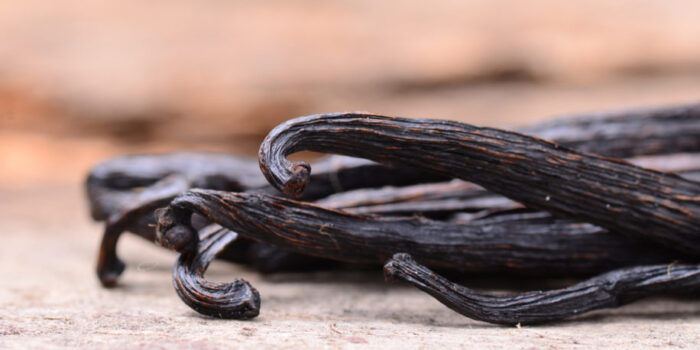
It seems like a no-brainer: always use fresh vanilla. But sometimes that isn’t convenient or necessary at all. We’ll explain the difference between the best-known varieties: fresh vanilla, extract and flavouring. When should you use which?

Vanilla pod
A vanilla pod is actually the pod of an orchid. It is a natural product and therefore the purest form of vanilla. Cut the pod open lengthwise and use the tip of a knife to remove the pulp (the seeds), then incorporate it while baking. Natural vanilla has the strongest flavour. For 500 grams of dough/batter, you need the pulp of one pod. You can place the ‘empty’ vanilla pod in a jar of sugar to make your own vanilla sugar. If vanilla is the main flavour of the dish (in ice cream or panna cotta, for example), it is better to use a vanilla pod.
How to make perfect rice every time
Extract
Vanilla extract comes in a jar and can be bought at delicatessen shops, baking stores and some Asian food shops. It is essentially a bottle of alcohol in which vanilla pods have been steeped, infusing the liquid with their flavour. So this product really does contain vanilla. You can also easily make it yourself by placing four split vanilla pods in 250 ml of vodka for a few months and shaking the bottle from time to time. One vanilla pod is approximately equivalent to one tablespoon of extract. If vanilla is an addition to your recipe, extract is perfectly suitable, in biscuits for example.
Vanilla flavouring
You may know this liquid from the small bottle in the baking aisle of your local supermarket. Vanilla flavouring contains no vanilla at all. It is made artificially in a laboratory from vanillin, water, ethanol and colouring. You need proportionally more flavouring than extract because flavouring has a less intense taste. You can add a splash of vanilla flavouring when baking, but it does not match the flavour of real vanilla.


