



Vegetable Challenge Week 2
Editor-in-chief and convinced carnivore Marcus Polman is trying to eat 250 grams of vegetables a day for three weeks. And with a little ingenuity, it’s perfectly doable.

How does eating 250 grams of vegetables a day work out? First of all: 250 grams is still quite a lot. At least if you limit it to a single serving spoonful of vegetables with dinner. My learning after two weeks: think about how you can incorporate a serving of vegetables at other times of the day. And that turns out to be surprisingly easy when you take a little more time to consider what you can do with vegetables.
Lunch
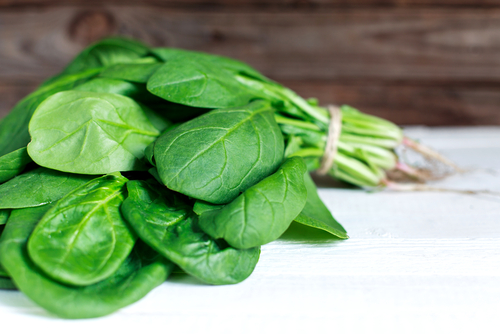
The way to get the majority of your recommended daily amount of vegetables even before the day is half over is to replace a routine lunchtime sandwich with salads in every possible variation. A plate full of mixed greens with, say, smoked Norwegian salmon, gorgonzola, buffalo mozzarella, prosciutto or tuna. You can cheer it up as you like with avocado, cherry tomatoes, sun-dried tomatoes, cucumber, haricots verts, microgreens (such as garden cress, watercress and alfalfa), and olives. And for extra crunch, add sunflower and pumpkin seeds, for example.
You’ll never get bored of a salad like this, even if you eat it every day, as I did this week. Instead of butterhead lettuce (use only the crisp, fresh green leaves from the heart of the head), you can work with arugula, romaine lettuce, endive, young leaf spinach or wild spinach. You can also vary endlessly with the vinaigrette. Also consider vinaigrette combinations with anchovies or pomegranate, or miso-sesame, as well as using different oils. An important tip for even more carefree salad enjoyment: invest in a good balsamic vinegar. A single lettuce leaf with a few drops of syrupy, top-quality balsamic vinegar tastes like a real treat.
Sunday breakfast
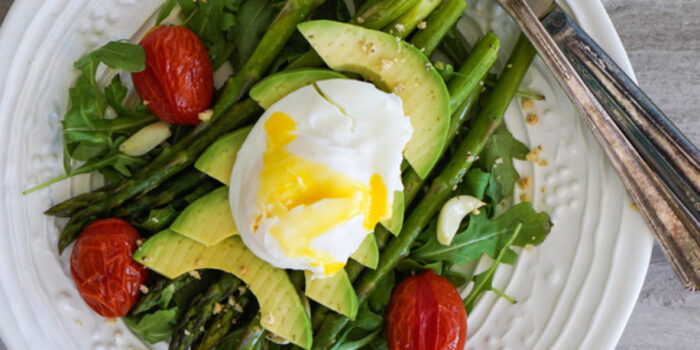
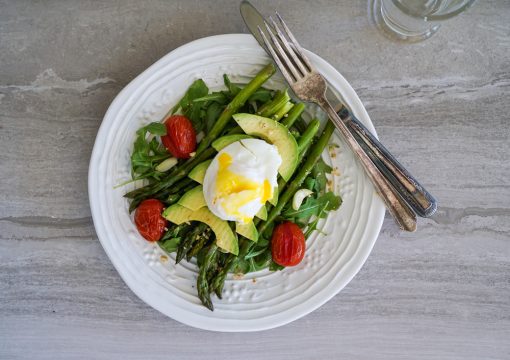
Instead of my favorite bacon and scrambled eggs on white toast (thickly spread with butter), I opted for this vegetable variation this week. Avocado, poached egg (soft-boiled works too), green asparagus, roasted cherry tomatoes and mixed greens. The soft egg yolk acts as a kind of sauce over the asparagus. Combined with the avocado and roasted tomato, you have a nutritious breakfast with a good serving of vegetables that will easily keep you going until lunch. It’s also quick and easy to make.
Snack
Cauliflower bites are a kind of vegetable version of chicken nuggets. They consist of cooked cauliflower florets mixed with ground spicy cheese, egg, mustard, spices (garlic powder, paprika, chili flakes) and herbs (parsley, chives). Mix everything together and shape into oval discs. For an extra-crispy result, coat the cauliflower bites in panko (dried Japanese breadcrumbs) first. Bake in the oven for thirty minutes (at 180 degrees) until golden brown and crisp. They go perfectly with romaine lettuce, cucumber, tomato and vinaigrette.

Egg muffins
Egg muffins are also ideal as a snack and truly filling. You can keep them in the refrigerator for several days and even in the freezer for several weeks. A good reason to visit your favorite (online) cookware store again to buy an ovenproof muffin tin, if you don’t already have one. Paper muffin cases work perfectly well too.
You’ll also need the following (for 6 muffins): 6 eggs, 2 tablespoons of chives, 1 small leek, 4 chestnut mushrooms, 1 carrot (grated), ½ red chili pepper, 6 slices of chicken breast, pepper and salt. First fry the leek and mushrooms together with the red chili pepper and carrot. Mix the eggs with the herbs and remaining ingredients. Place a slice of chicken breast in each cavity of the muffin tin. Pour the vegetable-and-egg mixture into the muffin tin. First bake for 15 minutes with foil covering the muffins, then for the final 15 minutes without it. They also work excellently with spinach and spring onion.
Frittata
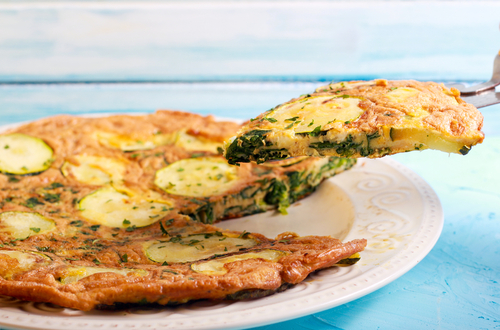
Frittata is the familiar Italian variation on the Dutch boerenomelet, or farmer’s omelet. The difference from an omelet is that it is thinner and cooked over high heat, while a frittata is gently cooked over low heat. You can add all kinds of vegetables and cook them in about 15 minutes (this can also be done in the oven). Ideal for using up leftover vegetables. Think broccoli, spinach, asparagus, tomato and parsley. If desired, fry or blanch the vegetables before mixing them with the beaten eggs. Cook over low heat and then turn it over so that you get a thick ‘pancake’.
Cauliflower rice
And perhaps my biggest discovery so far: the phenomenon of cauliflower rice. It has long been a must-eat among hardcore low-carb or reduced-carb food enthusiasts, but for me it’s a new phenomenon that I’m happy to embrace from now on. Instead of cooked rice, blend raw cauliflower florets until they approximate the texture of rice. Albert Heijn also sells perfectly good pre-packaged cauliflower rice.
Serve the cauliflower rice with, for example, red curry paste, some chicken or prawns and stir-fry vegetables, and you have a feast that gets you almost your entire daily serving of 250 grams of vegetables in one go. Note: you don’t need to bake or stir-fry the ground cauliflower; it’s already delicious raw. Want even more convenience? Appie recently started selling so-called fresh ingredient packs containing all the necessary fresh vegetables, including the curry paste (you only need to cut up the vegetables). These fresh ingredient packs are available in various versions, including Thai green curry and Indian curry madras. The advantage: you essentially have no waste, because the pack contains exactly the right quantities (for three to four people).
This article was created in collaboration with Albert Heijn.
See also: week 1 Challenge, Am I eating enough vegetables?


