


Why are bay leaves in the supermarket so incredibly expensive? KvW investigated

Have you ever noticed how expensive bay leaves are in the supermarket? It’s actually pretty strange when you know that the leaves are worthless in Turkey — bay plants grow wild there like weeds. Keuringsdienst van Waarde followed the money trail from Turkey to the Netherlands to find out how the difference between the purchase and retail price can be so huge.

Incredibly expensive
While eating a delicious bowl of soup — speaking from experience — you’ve probably had a (piece of) bay leaf suddenly end up in your mouth. Bay is the leaf you let simmer in soups, casseroles and sauces as an important flavour enhancer. These aromatic leaves impart a woody and subtly bitter flavour. But we were completely surprised that they are so pricey: the price per kilo can easily rise from six to 850 euros. Even silver is cheaper!
Keuringsdienst van Waarde wants to know how bay leaves in a bag can be so incredibly expensive and calls a bay leaf supplier to ask for an explanation. The woman who answers the phone is shocked by the enormous price per kilo and says this is partly because the herb is picked by hand in Turkey. The process is not easy and is labour-intensive.
Money trees in Turkey
High-quality bay leaves come from plants that grow wild in Turkey. Keuringsdienst travels to Turkey in search of the origin of these Turkish money trees. It’s quite a drive by tractor, followed by some climbing and scrambling.
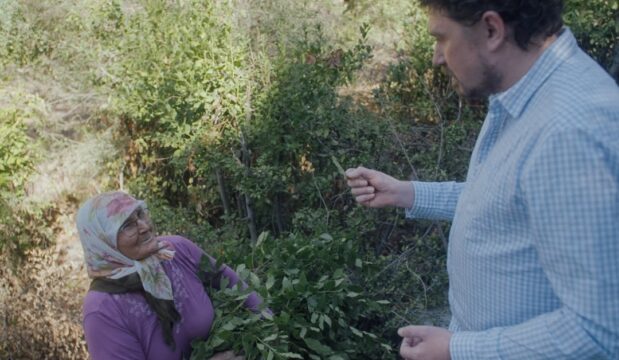
Once they arrive in a vast landscape with endless numbers of bay bushes, an elderly woman emerges from the woods. It isn’t farmers but local villagers who pick the leaves. With considerable force, the branches covered in bay leaves are torn from the bush. It’s a tough job, and the poor woman is covered in scratches. But she’s willing to do anything for it because the earnings are good. The high price is supposedly due to the demanding hand-picking process, right? Um… not really: the local people receive six lira per kilo, which works out at around 33 (!) cents.
Selecting delicious bay leaves
The picking is done and the leaves can be dried. They are sold to the Turkish bay leaf factory for three euros. The yellow and withered leaves are picked out by hand. The finest leaves are selected and tossed into large boxes. The boxes are exported to as many as seventy countries, including the Netherlands, for fifteen euros per kilo. But where is the big money being made?
Money in the till
The bay leaves arrive at the spice wholesaler in large boxes. The leaves are sorted and packed by hand into small containers. Seven grams per container, with a retail price of one and a half euros. That makes a price of 300 euros per kilo. The bay leaf seller is rather secretive about the price he pays to transport the Turkish gold to the Netherlands. Eventually, he lets slip that one kilo costs less than fifty euros. Now we’re getting somewhere — this is where serious money is being made.
Mystery solved
The Netherlands brings in herbs from far away and sells them domestically with a huge margin. One kilo produces around 250 packages. This process is said to drive up the cost price considerably. Nothing could be further from the truth. The trick is to sell bay leaves in a very small package for a few euros. No one notices that the price per kilo is so high, and no one bothers to work it out backwards. Who actually looks at the small print on the label to check the price per kilo?
The consumer is being fooled (again). Meanwhile, I’m daydreaming about a career switch to selling bay leaves.
Also read:
- Drain cleaner in your olive? Keuringsdienst van Waarde shows you
- Keuringsdienst van Waarde, our favourites
- Keuringsdienst investigates: cervelat, salami and luncheon meat — why do they look so much alike?
Source and image: Keuringsdienst van Waarde, KRO-NCRV


