


Why You Should Always Make Pesto in a Mortar and Pestle
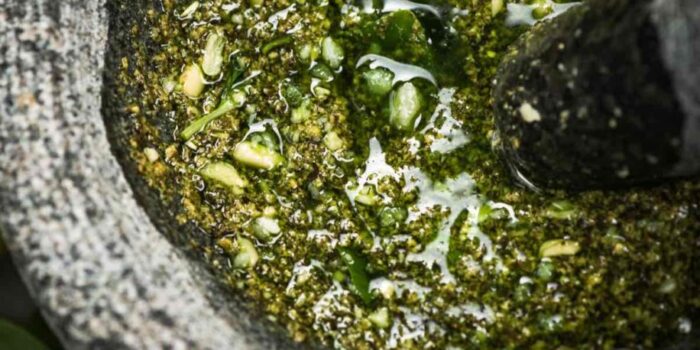
Because of my work, I’m served the most wide-ranging culinary tips and tricks every day. Online, but also face-to-face in the form of well-intentioned advice. I often find it needlessly complicated. No, I’m not cooking rice or eggs in the microwave so I don’t have to dirty that pan. Leave me alone. Sometimes, on the other hand, something sticks with me and sooner or later I have to try it. Making pesto in a mortar and pestle, for example.

In the first episode of the Netflix series Salt, Fat, Acid, Heat, Samin Nosrat is in Liguria, northern Italy. She is visiting Lilia ‘la nonna’, who still makes her pesto the old-fashioned way. That is: in a mortar and pestle instead of with a stick blender or food processor. It intrigued me. I actually only use my mortar and pestle for boemboes and sambals, and for years I’ve been saying that I don’t understand why so many people grind their seasonings into a purée in a food processor. But making the connection with pesto? No, I’d never made it before. Considering that pesto means ‘pounded’ in the Ligurian dialect, that’s actually rather silly.
Rich and creamy
Anyway: yesterday the moment had finally arrived. I’d had the ingredients for the divine almond pesto from The Bible of Italian Cuisine on my shopping list since the book was published. The recipe says that the food processor produces a perfectly good result, but who wants to make something that’s merely fine? I wanted my pesto to be just as rich and creamy as la nonna, so I got out my mortar and pestle.
Pesto heaven
It takes longer, and your patience is especially tested when pounding the basil, but it’s more than worth it. Pounded pesto is creamier, coarser in texture and much more aromatic. That last point may have something to do with the fact that you spend at least fifteen to twenty minutes with your nose hovering over that mortar, but still. If you’re going to try it yourself, stick to the following proportions and order, and you’ll have a golden ticket to pesto heaven in your hands.
The right proportions
Classic basil pesto from Liguria consists of pine nuts, garlic, basil, salt, Parmesan and/or Pecorino Romano, and olive oil. Like me, do you feel like trying something different, or do you have other ingredients at home? As long as you stick to the following proportions (enough for 4 people), you can vary it ‘just fine’:
- 60 g seeds or nuts, toasted
- 1–2 cloves of garlic
- 120 g herbs or 200 g vegetables
- 90 g cheese, grated
- 180 ml extra-virgin olive oil
- salt to taste
The right order
The most important thing is to toast the seeds or nuts first and then pound them finely in the mortar with the garlic. Once it forms a paste-like mixture, continue with the next ingredient: the basil. Grind the basil in the mortar with a pinch of coarse sea salt. Not too much, because as soon as the natural oils are released, you’ll also add the cheese. Stir it through, then immediately continue with the olive oil. Let the pesto stand for a few minutes, then taste to see whether it needs more garlic, salt, cheese or oil. Adjust the seasoning if necessary.
Are you stirring the pesto through the pasta? Don’t heat it too much. The oxidation of the basil can quickly turn the pesto dark and dull, which would be a shame given that fresh green color.
Read also:


