



Why You Should Get Rid of Your Non-Stick Pans
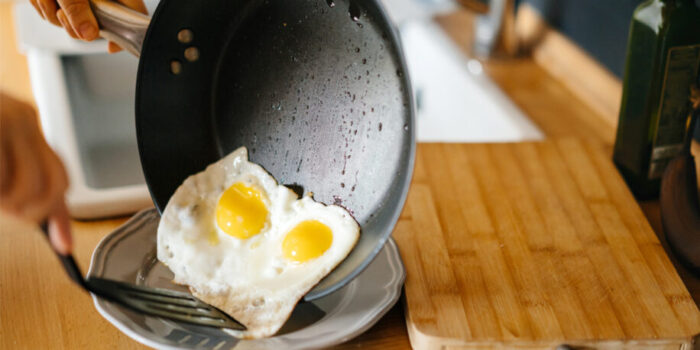
The non-stick pan is the most popular pan in the Netherlands. The convenient coating in the pan means that anyone can fry a piece of meat or an egg without using much oil or butter, without it sticking to the pan. Handy! But there is a side effect to these pans that is less rosy. In fact, you would be better off getting rid of those non-stick pans. Especially if they are damaged!

The fact that these pans are harmful has been known for quite some time. The coating that keeps your food from sticking is called Teflon, a type of plastic. Teflon is made from PFAS chemicals. Once PFAS has been processed into Teflon, it is no longer harmful, provided you do not heat the pan above 200 degrees and put oil or butter in it. If the pan gets hotter without any fat, extremely toxic particles are released from the Teflon, which are harmful to people when inhaled and also to animals (especially birds, because of their sensitive airways).
Anti-non-stick pan
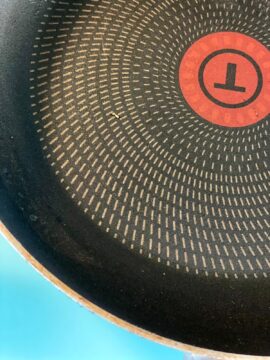
The Keuringsdienst van Waarde visited star chef Joris Bijdendijk to ask his opinion about the non-stick pan. He is not a fan. Using pans that must not get hot in a professional kitchen is not exactly convenient, and the pan’s cooking results are not optimal either. “It’s actually a kind of microwave that simply heats up the product,” Joris explains. Non-stick pans with scratches and flakes in the coating should go straight into the bin. Because you end up ingesting small flakes of Teflon. Just plastic, in other words, and carcinogenic.
Bad for people and the environment
So for your own health (and that of your parakeet or parrot), you would be better off banishing the pan. Not only for your own health, either; the production of such pans has a huge impact on the environment. The Teflon coating ends up in the environment during the process and as it breaks down. These are chemicals that do not break down any further. PFOA, a PFAS variant that has been banned since 2014, has indeed been replaced by so-called Gen-X, which was supposed to be more environmentally friendly, but that does not appear to be entirely the case.
Cast iron, stainless steel, carbon steel and ceramic
But which pan should you use instead? Joris says that cast-iron pans, which retain heat well, stainless-steel pans that are easy to maintain, or carbon-steel and ceramic pans are the pans you can use as replacements. Better for yourself, the environment and a tastier steak! Personally, I like ceramic frying pans best. Unlike Teflon, the ceramic coating can withstand much higher temperatures, and you do not need any butter or oil. Because the coating is also much harder, it is less likely to flake and leave pieces in your food. In any case, whichever alternative you choose: NEVER cut in the pan or turn your meat with a fork!
Read also:
- Why you should no longer use bamboo tableware
- Never put this in the microwave
- When do your pans actually need replacing?


