



Retteketet, everyone on the Muscadet
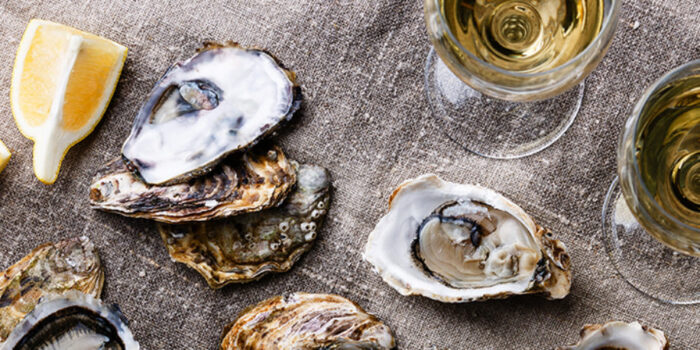
Muscadet is THE briny summer wine for sun, sea and oysters. Crisp and fresh, with a tingle on your tongue and summer flowers in your nose. It used to be rather dull and sour, but nowadays this Atlantic wine is above all juicy and vibrantly fresh.

When you think of Loire wine, you think of Sancerre and Pouilly-Fumé. Taut, fresh and often cracklingly dry. Perfect with goat’s cheese, radiant sunshine and pretty much everything from the sea. But many more delicious wines come from there. Take the lesser-known Muscadet. Low in alcohol, surprisingly juicy and also more reasonably priced than its elegant neighbour.
Muscadet is not Muscat
Muscadet is often confused with the sultry Muscat wine, made from the grape of the same name. But apart from that small similarity in name, Muscadet is nothing like this extravagant, (usually) sweet wine. Muscadet is made from melon de Bourgogne, which produces a relatively simple and dry wine. The grape originally came from – you guessed it – the Burgundy region. But nowadays it is primarily the most important grape of the western Loire Valley.
Salty wine
Muscadet tastes light and taut, and it is more salty than sweet. Well, not actually salty, of course. But try licking a shellfish shell. There. Not surprising, because the Muscadet region begins right where the Loire flows into the sea. The grapevines stand more or less with their roots in the Atlantic Ocean, while the grape leaves flutter in a briny sea breeze.
Reading the label
The result is oceanic, fresh wines, with a touch of lime and sometimes a tropical hint on the nose. Simply delicious. But one Muscadet is not the same as another. So read the label carefully. If the area Sèvre et Maine is mentioned on the label, you’re already on the right track. This is where the best Muscadets come from. The term sur Lie tells you that the wine has matured on its own lees for at least one winter. This sediment of dead yeast cells may not sound all that appealing, but it is precisely what gives a good Muscadet character and quality. More and more local organic farmers are using these lees to make their finest wines. And, also not unimportant: most Muscadets are best enjoyed while still young.
Sea wine with briny delicacies
A thirst-quenching sea wine like this really needs nothing at all. Open, drink, done. But if you happen to have a large platter of oysters and shellfish nearby, Muscadet is an unbeatable match. Or simply fish & chips. It goes wonderfully with that too.
Also read:


