


Mulled Wine with a Historical Twist
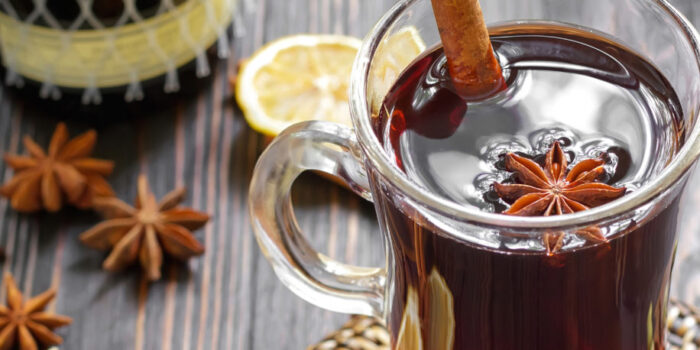
No Christmas market, ice rink or ski resort is complete without the sweet aromas of mulled wine. Cloves and cinnamon, with a fresh hint of citrus fruit and the thin air of evaporating alcohol.

“A merry Christmas, Bob!” said Scrooge, with an earnestness that could not be mistaken, as he clapped him on the back. “A merrier Christmas, Bob, my good fellow, than I have given you, for many a year! I’ll raise your salary, and endeavour to assist your struggling family, and we will discuss your affairs this very afternoon, over a Christmas bowl of smoking bishop, Bob!” – Charles Dickens, A Christmas Carol(1843)
Actually, as a true wine lover, you really can’t justify liking this sweet concoction. It may be cosy and convivial, but from a wine perspective, such a steaming cup is downright appalling. But it can be done differently.
As Old as Time
Thanks to Charles Dickens and his Christmas Carol, mulled wine is forever associated with Christmas. Nowadays, the first spicy aromas immediately make us think of snow, Christmas carols and cosy gatherings. But sweet and spiced wine has been around for ages. Warm wine was already widely consumed in the Roman Empire. The added spices and sweetness helped preserve the wine that had been brought along. This meant the soldiers could simply keep drinking during their many conquests. Medieval literature also frequently mentions a drink called hypocras. A spiced and sweet concoction based on wine. This version was often used for medicinal purposes and—in contrast to the rest—was not drunk warm.
Scrooge, of course, did not call his drink mulled wine. In the Victorian era it was known as smoking bishop, which seems to have more in common with our—Sinterklaas-related—bisschopswijn. Nowadays, the English prefer to call it mulled wine. And the French call it vin chaud. The fact that Glühwein became the customary term here is simply due to the abundance of Christmas markets hosted by our eastern neighbours. And it rolls off the tongue a little more pleasantly than gloeiwijn.
Attention and Respect
Given its long history, mulled wine deserves a little more attention and respect. So let’s start with the basics. Those ready-made bottles usually contain poor wine in a flavour-concealing disguise. And the price reflects that. Bad wine does not suddenly become delicious just because it is warm and sweet. Simply making it yourself suddenly gives you a surprisingly tasty and heart-warming drink. After all, the end result is only as good as the ingredients used. And all those sultry, convivial aromas come free!
The basis for a good mulled wine is a tasty red wine. One you would otherwise have chosen as well. Opt for organic fruit; after all, you use the skins in the wine. Don’t use too much sugar; in the past, that addition was primarily for preservation. And above all, this is very important: do not boil the wine, but only warm it. Otherwise, all the alcohol will have evaporated before the first sip is taken.
Snack
Naturally, this wine should also be accompanied by a suitable snack. One that complements its characteristic flavours beautifully. At German Christmas markets, that traditionally means Reibekuchen. A kind of pancake made from grated potato. Tasty, crispy and made in no time. What’s more, it is wonderfully delicious with the wine’s spiciness. This combination would certainly not be out of place as a prelude to your Christmas dinner.


