



Spilled Red Wine? Here’s How to Fix It!
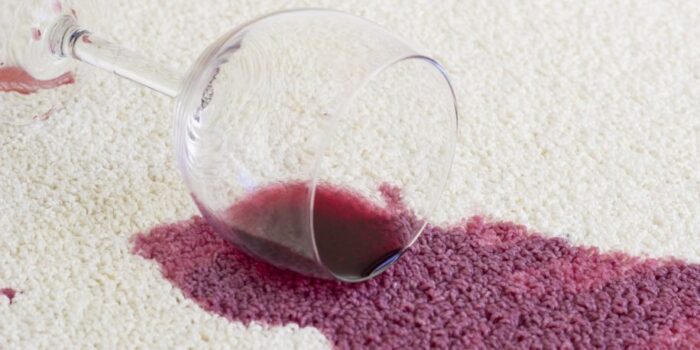
You know how it is. During a dinner party, you get a little too talkative and enthusiastic. In one fluid movement, you knock that beautifully colored red wine onto your neighbor and the tablecloth. What should you do in a moment like that?

Under the influence of alcohol, the functioning of the cerebral cortex in our central nervous system is suppressed. As a result, our mood becomes more exuberant and our movements a little more clumsy. Nothing wrong with that – as long as you’re not behind the wheel – but with red wine nearby, it’s not entirely without risk. To keep the damage as limited as possible, acting quickly is key.
From vodka to cat litter
A classic solution is, of course, white wine. Pour a generous amount over it and the acid in the white wine will immediately remove the color from the red stain. Don’t have any white wine on hand? Other acidic products such as low-fat yogurt and sauerkraut are just as effective. But milk (for removing the color), sparkling water (carbon dioxide), and even vodka or genever (the high alcohol content dissolves colorants) also work surprisingly well.
Another classic is sprinkling salt over it. Preferably within two minutes, cover the red stain generously with a thick layer and leave it to soak in for a long time. Once the salt has completely absorbed the wine, brush it off and repeat if necessary. This only works if the stain is still really wet, of course. No salt available? Cat litter is a good alternative – and because of its highly absorbent properties, perhaps even a better one.
Broken glass and bread
Sometimes it’s not just the stain but also the broken wine glass that’s a problem. With a table full of guests, vacuuming is quite a hassle. To protect everyone’s hands and feet from unpleasant shards, a simple piece of bread offers an easy solution. First carefully pick up the largest pieces of glass, then wipe the soft side of a piece of bread over the shards. Its porous surface will act like a sponge and ‘pick up’ all the smaller fragments and splinters.
Read also:


