


Break Your Bad Baking Habits
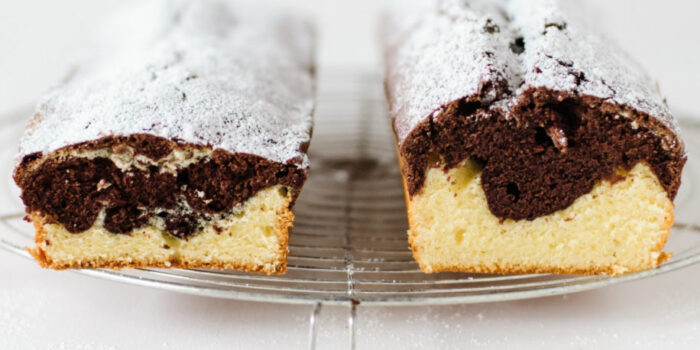
Do you try your best but keep dealing with sunken cakes, cookies that fall apart and other Nailed It situations? Chances are you’re guilty of one or more of these baking habits. Break them and you’ll be making the most delicious bakes in no time.

You don’t read the recipe
Instead of reading the recipe thoroughly, you skim through it quickly. Then, halfway through baking, you suddenly discover that you’re missing an ingredient, or that your brioche dough needs to spend an entire night in the fridge while you wanted to make it quickly for breakfast. Shit. Read the recipe carefully beforehand so you know exactly what to expect.
You don’t weigh your ingredients
While you can usually go by feel when making a savory dish, I absolutely don’t recommend doing that when baking. Baking is science, and if you cut corners, the consequences can be disastrous. Does a cookie recipe call for granulated sugar, but you only have light brown sugar at home? The result will be completely different, and the ratios are also extremely important. Just ask the friends I once made a magic cake for when I didn’t have my scales with me. The result was a sort of sweet omelet that they still tease me about years later. Measure twice, bake once!
You don’t preheat your oven properly
Shit, you completely forgot to preheat the oven, but now you’re impatient and want to eat as soon as possible. I get it, but still wait until your oven has reached the desired temperature. The direct high heat is important in the baking process; otherwise, you risk getting cookies that spread and other baking fiascos. Most ovens heat up within ten minutes, so even though it feels like an eternity, it really isn’t that bad.
If you bake a lot, it’s also absolutely worth buying an oven thermometer. Your oven may say it’s at 180 ºC, while it’s actually much hotter or colder. My oven is sometimes even 30 ºC warmer than it says it is, so you can imagine how much that affects your bakes.
You confuse baking powder and baking soda
Baking powder and baking soda are both leavening agents for cakes and pies, but they aren’t the same thing. Baking powder is baking soda with a stabilizer (cornstarch or cream of tartar), so you can’t substitute one for the other one-to-one. Generally speaking, you use baking soda when there’s an acid (such as lemon juice or buttermilk) in your creation. Luckily, you don’t have to figure that out yourself—the recipe will simply tell you.
Your ingredients are too warm or too cold
Does it say that your butter or eggs should be at room temperature? Take them out of the fridge half an hour beforehand. Didn’t do that? Then you risk ending up with split frosting or batter. For shortbread, scones and crumble, on the other hand, you need cold butter. Cold butter makes for crispier bakes, while soft butter creates a softer texture.
You overmix your dough or batter
Kneading or mixing for longer isn’t always better; sometimes it even ruins the entire end result. The longer you knead or mix, the more gluten develops and the chewier the bake becomes. Light, airy cake or flaky scones? Mix until the ingredients are just combined, and no longer.
You’re too impatient
I understand that you’d love to keep checking on the progress of your home made bake. Still, resist the temptation to keep opening the oven door. Every time you do, you lower the temperature in the oven. This is especially important for things that need to rise—the oven door needs to stay closed. You don’t want a sunken soufflé, of course.
You don’t let your bake cool
Nothing beats warm baked goods, but always let them cool for a little while. It doesn’t have to be long, but don’t eat them straight from the oven. This gives the ingredients time to rest and firm up again. Just try picking up a cookie straight from the oven—it’s guaranteed to fall apart.
If you’re covering cakes with frosting, it’s important to let them cool all the way to room temperature. Otherwise, the frosting will simply melt off, leaving you with a hot mess.
Also read:


