



Brussels waffle vs. Liège waffle
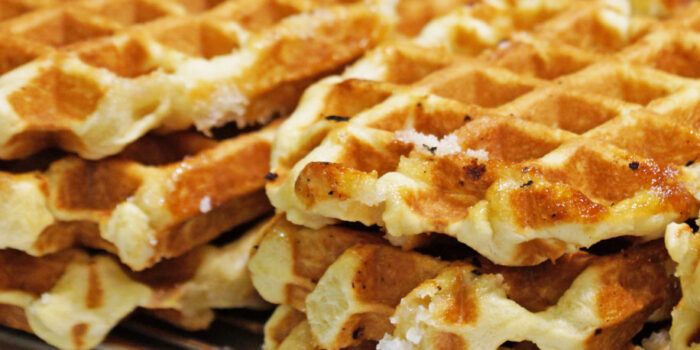
A light and crispy waffle with powdered sugar or a thick and incredibly sweet bake with sugar chunks: you want both. You don’t pay much attention to the differences. They both come from Belgium anyway, right? Yes, but the two waffles actually have little else in common.

Batter or dough?
The batter for a Brussels waffle is made with eggs, butter, milk and flour, but without sugar or yeast. To make the waffle light and airy, you whisk the egg whites until stiff. Liège waffle dough does contain yeast, as well as plenty of pearl sugar. It is much thicker and is therefore not batter but dough.
Special waffle iron
You bake a Brussels waffle in a special waffle iron with twenty squares – count them yourself. The more batter you use, the thicker and lighter the waffle becomes. If you do it right, the bake comes out of the iron square and with straight sides, light brown and crispy, while still being incredibly soft inside.
A Liège waffle is not square but oval, with rounded corners. A classic gaufre de liège has twenty-four squares, but if you buy pre-packaged supermarket waffles, there are usually quite a few fewer. The hot waffle iron in which you bake the Liège waffle causes the pearl sugar on the outside to caramelize. The sugar pieces inside remain beautifully intact despite the heat. The result: a thick, chewy waffle that is sweeter than the Brussels version.
Toppings: yes or no?
Because you make Brussels waffles without sugar, they should be topped with chocolate, a generous dollop of whipped cream, a handful of strawberries or simply plenty of powdered sugar. On a Liège waffle, even that little bit of powdered sugar is not done: it is sweet enough on its own, and is therefore best eaten plain.
Also read:


