


Cold, soft or melted butter?
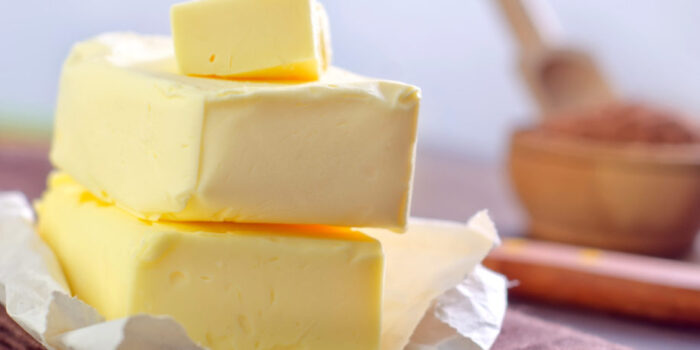
One recipe insists that the butter must be ice-cold, while for the next you need to take the butter out of the fridge at least an hour in advance to let it come to room temperature. So when should you do what? It all depends on what kind of dough you want to create.

Do you want flaky, crisp pastry? Or a bake with a soft, gooey interior? The temperature of the butter determines the end result. It’s usually specified in the recipe, but would you like to understand it a little better for yourself? We’ll explain it in detail.
Cold butter
A good rule of thumb is: use cold butter for crisp things. Because butter straight from the fridge is still hard, it isn’t fully incorporated into the dough. Instead, you get tiny pieces of butter throughout the dough. The steam released from the butter during baking (butter consists of eighteen percent water) creates crisp, flaky layers.
Make sure you work the dough as little as possible with your hands. Put the ice-cold butter together with the other ingredients in a food processor and mix everything, or use two knives to chop the cubes of butter into smaller pieces. This technique is perfect for scones and biscuits, pie crust, crumbles and crisp cookies.
Room temperature
For cakes and softer cookies, recipes usually call for butter at room temperature. Soft butter is distributed more evenly throughout the dough, resulting in a softer, more tender end result. Often, the first step is to beat the butter and sugar for a long time, until light and fluffy. This also gives you a beautifully airy bake.
Are you making a cake with frosting, such as these pear cupcakes with cream cheese frosting? In that case too, it’s better to use butter at room temperature, as this reduces the chance of the mixture splitting. And why does brioche have such a silky-soft texture? Exactly: very soft butter.
Forgot to take your butter out of the fridge in time? Don’t worry. Cut the butter into small cubes; they only need about 15 minutes instead of 30–60 minutes to soften.
Melted
Melted butter has already lost much of its moisture and therefore contributes to a soft, dense texture. Melted butter appears less often in recipes, but it’s perfect for things like brownies and other bakes that don’t need to be light and airy.
Also read:


